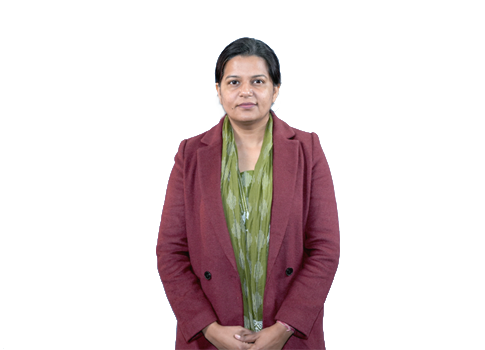
Jyoti Sharma
Assistant Professor, School of Health Sciences and Technology, UPES
Profile Summary
Ms. Jyoti Sharma is an Assistant Professor at the School of Health Sciences and Technology, UPES. Her academic and research background spans biotechnology, bioinformatics, machine learning, and data science, strengthened through her integrated B.Tech.–M.Tech. training and doctoral work at IIT Jodhpur.
Her research focuses on understanding the genetic basis of complex traits through population-scale genomics, with expertise in Genome-Wide Association Studies (GWAS), Mendelian Randomization, variant prioritization, and machine learning applications in statistical genetics. She has contributed to the GenomeIndia Initiative, working on whole-genome sequencing pipelines and genotype–phenotype association studies. Her work has been published in reputed journals such as BMC Genomics, Scientific Reports, Communications Biology, and NPJ Systems Biology and Applications.
She is committed to advancing precision medicine through computational approaches and fostering interdisciplinary scientific training for the next generation of genomics researchers.
Work Experience
Before joining UPES, she spent over three years in academic and research roles, including serving as a Data Analyst for the GenomeIndia Project at IIT Jodhpur. She has also worked as a Research Innovation Fellow on immunoinformatics and HIV drug discovery, and as a Junior Research Fellow in molecular immunology.
Her professional experience spans genomic data analysis, machine learning applications, and multi-omics interpretation across large-scale population datasets.
Research Interests
Computational Genomics, AI in Biology, GWAS and Statistical Genetics, Mendelian Randomization, Machine Learning for Genotype–Phenotype Prediction, Population Genetics, NGS Analysis, Multi-Omics Integration, Variant Prioritization and Causal Inference, Precision Medicine.
Teaching Philosophy
Her teaching philosophy centers on enabling students to think computationally about biological problems. She emphasizes conceptual clarity, hands-on problem solving, and connecting theory with real-world genomic applications.
Through interactive discussions, data-driven case studies, and guided analytical workflows, she encourages students to develop scientific curiosity, analytical rigor, and independent research skills. Her classroom environment is collaborative, exploratory, and grounded in the rapidly evolving landscape of multi-omics and health data science.
Awards and Grants
She qualified the national GATE Life Sciences examination and received both Junior and Senior Research Fellowships from the Department of Science and Technology, Government of India. Her research has been recognized at international conferences including ISMB/ECCB, GIW/ISCB-Asia, and ISHG, where she presented award-selected posters and oral talks.
Courses Taught
Artificial Intelligence and Bioinformatics, Introduction to Bioinformatics and Computational Biology, Algorithms in Biology, Omics Databases. Her teaching integrates foundational concepts with hands-on data analysis, enabling students to work with real-world omics datasets, build analytical workflows, and understand algorithmic principles behind modern bioinformatics tools.
Scholarly Activities
Her research focuses on advancing statistical and machine learning methods for understanding complex traits and disease biology. Her scholarly contributions include methodological innovations for variant prioritization in GWAS, optimized instrumental variable selection for Mendelian Randomization, and machine learning-driven causal inference frameworks.
She has presented her work at leading international conferences including ISMB/ECCB, GIW/ISCB-Asia, IEEE CIBCB, and the Mendelian Randomization Conference. She has contributed to collaborative consortia such as GenomeIndia, working on large-scale whole genome sequencing analysis and population genomics. Additionally, she has co-authored a chapter in the Encyclopedia of Bioinformatics and Computational Biology (Elsevier).
She remains committed to fostering interdisciplinary research and translating computational discoveries into impactful biomedical insights.
Contact


