- Home
- Faculty
- School of Advanced Engineering
- Mechanical
- Kirtiman Singh
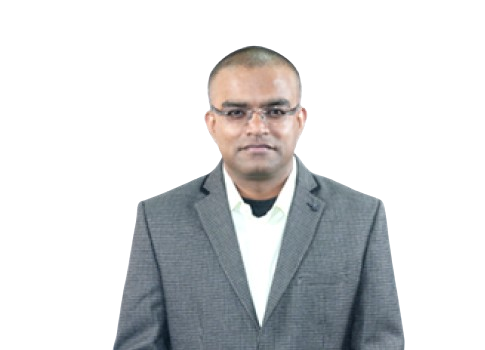
Kirtiman Singh
Assistant Professor, Mechanical Cluster, School of Advanced Engineering, UPES
Profile Summary
Dr. Kirtiman Singh is a translational researcher and educator specializing in systems design and human-machine interface. His work spans the design and automation of industrial wastewater treatment plants, development of machine-learning-enabled decision-support frameworks, data-driven process modeling, and nonlinear control design of robotic and aerial systems. His doctoral research focused on designing an informatics framework and integrating explainable characteristics into process design to optimize and automate advanced oxidation process-based industrial dye-wastewater remediation, combining chemometrics, machine learning, and Bayesian inference to build uncertainty-aware predictive models.
His contributions extend across multiple disciplines, including nonlinear control design, robotic manipulators, quaternion dynamics, nanomaterial design and characterization, multi-sensor data fusion, and embedded hardware-in-the-loop system development. His extensive experience as a teaching assistant at IIT Kanpur, NPTEL, and other programs enables him to integrate theory with practical, project-based learning that cultivates deep student engagement. His goal remains to advance intelligent and sustainable system design through AI-driven modelling, robust control, and next-generation automation frameworks.
Work Experience
Dr. Singh is currently serving as an Assistant Professor in the Mechanical Cluster at UPES. He previously held the Fellowship for Academic and Research Excellence (FARE) Post-Doctoral Fellowship at IIT Kanpur, where he contributed to teaching and research in system design, AI/ML for design, and related domains. His earlier experience includes roles as Subject Domain Expert at Turing, Research Scholar, Senior Project Associate, and Project Engineer at IIT Kanpur, as well as Junior Research Fellow at Ahmedabad University. He has also served in multiple teaching assistantships across engineering disciplines.
Research Interests
Human-Machine Interfaces | Systems Design | Computational Design | Nonlinear Control | Machine Learning for Robotics and Aerospace Applications | Process Modeling | Bayesian Identification | Embedded Systems | Hardware-in-the-Loop Systems | Catalytic Process Informatics | Spectral-Chromatographic Data Fusion | Intelligent Decision-Support Systems.
Teaching Philosophy
Dr. Singh believes in blending theoretical depth with practical application through project-based learning. He encourages students to solve real-world engineering problems using analytical thinking, experimentation, and modern computational tools. His teaching fosters curiosity, interdisciplinary understanding, and hands-on innovation while preparing students for emerging challenges in intelligent system design and automation.
Courses Taught
Control Systems | Systems Design | Robotics | Automation Engineering | Process Modelling | Machine Learning Applications in Engineering | Embedded Systems | Interdisciplinary Engineering Laboratories.
Awards and Grants
Dr. Singh has been awarded the Fellowship for Academic and Research Excellence (FARE) Post-Doctoral Fellowship at IIT Kanpur. He has also contributed to multiple sponsored research projects and academic initiatives at premier institutions, reflecting his strong research and teaching profile.
Scholarly Activities
Dr. Singh has actively contributed to interdisciplinary research in intelligent systems, sustainable process engineering, robotics, and automation. His scholarly work includes AI-enabled wastewater treatment frameworks, explainable machine learning for engineering systems, nonlinear control of robotic platforms, and uncertainty-aware process modelling.
He has participated in academic collaborations across IIT Kanpur and Ahmedabad University, contributed to executive training programs, and supported large-scale research projects. His academic engagement includes mentoring students, supporting NPTEL and other learning initiatives, and integrating advanced computational tools into engineering education. Through his research and teaching, he continues to advance innovation at the intersection of mechanical systems, artificial intelligence, and sustainable technologies.
Contact


