- Home
- Faculty
- School of Computer Science
- Dr. Subhrasankar Chatterjee
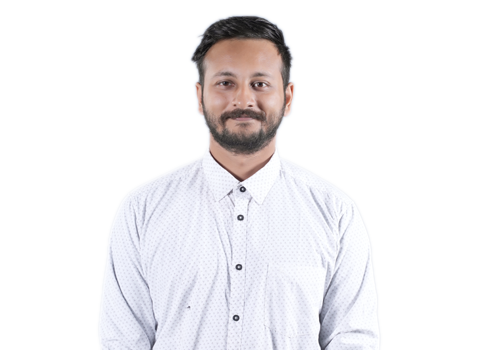
Dr. Subhrasankar Chatterjee
Assistant Professor – Senior Scale
Profile Summary
Dr. Subhrasankar Chatterjee is a computational neuroscientist and machine learning researcher working at the intersection of visual neuroscience, biologically inspired AI, and model interpretability. His research focuses on understanding how complex visual representations emerge across scales—from neurons and circuits to voxel-level brain signals—and how these principles can be formalized in computational models that are both predictive and mechanistically interpretable.
He works extensively with large-scale neural datasets, including fMRI and EEG, and benchmarks computational models using rigorous functional fidelity metrics that go beyond surface-level performance. His academic work combines neuroscience theory with advanced artificial intelligence methodologies.
Work Experience
Dr. Chatterjee serves as Assistant Professor (Senior Scale) in the School of Computer Science at UPES. He has extensive research experience in computational neuroscience, machine learning, and neural data modeling, with strong expertise in large-scale brain data analysis, biologically inspired architectures, and interdisciplinary AI research.
Research Interests
Computational Neuroscience | Visual Neuroscience | Machine Learning | Deep Neural Networks | Transformer Architectures | Sparse Coding | Modular Recurrent Networks | Model Interpretability | Brain–AI Alignment | EEG | fMRI | Cross-Modal Representation Learning
Teaching Philosophy
Dr. Chatterjee's teaching philosophy centers on the idea that learning is not the accumulation of information, but the construction of understanding. He believes students truly understand a concept when they can reason from first principles, identify assumptions, and transfer ideas across contexts.
Rather than focusing on memorization or procedures, he encourages conceptual exploration, questioning, and error-driven refinement. His approach emphasizes active engagement, intuitive understanding, and the ability to generate new insights from core principles.
Courses Taught
Probability, Entropy and Monte Carlo Simulation | Formal Language and Automata Theory | Foundations of Data Science
Awards and Achievements
Dr. Chatterjee has contributed significantly to interdisciplinary research combining neuroscience and artificial intelligence through advanced computational modeling, rigorous benchmarking methods, and biologically grounded machine learning frameworks.
Scholarly Activities
Dr. Chatterjee's work integrates deep neural networks, transformer architectures, and biologically inspired models such as sparse coding and modular recurrent networks to study perception, invariance, and context-dependent processing in the visual system. A central theme of his research is perturbation-based evaluation, where models are tested using controlled stimulus manipulations such as spatial shifts, contrast changes, and occlusions to assess alignment with cortical representations.
He has also developed interpretability frameworks including voxelwise stimulus optimization, saliency mapping, and representation-space analysis to bridge black-box AI models with neuroscientific theory. His ongoing research explores biologically inspired modular and recurrent architectures, surprise-weighted representations, and mappings between brain activity and semantic embedding spaces.
His research philosophy emphasizes falsifiability, careful controls, and tight alignment between computational hypotheses and empirical data.
Contact


