- Home
- Faculty
- School of Computer Science
- Narendra Sharma
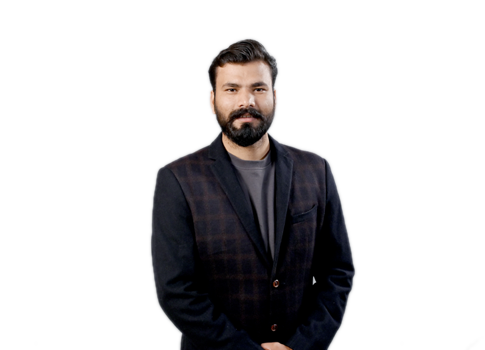
Narendra Sharma
Assistant Professor
Profile Summary
Narendra Sharma is an academician and researcher working in the domains of Machine Learning, Deep Learning, and Brain–Computer Interfaces (BCI). He has experience in EEG-based signal acquisition, motor imagery modelling, prosthetic systems, and computational intelligence.
He has contributed to the establishment of advanced research laboratories, including an Electroencephalography Lab and a Computational Intelligence & Smart Motion Analysis Lab at NIT Delhi. His work also includes drone-based BCI systems, migraine detection models, financial forecasting, and robotic arm systems using 3D printing and computer vision.
He has published in SCIE and Scopus-indexed venues, with research focused on EEG modelling, BCI systems, and AI-driven biomedical applications. His academic interests include neural data processing, intelligent systems, and developing datasets and frameworks for analysing human brain states.
Work Experience
Narendra Sharma has held academic and research positions at UPES Dehradun, IILM University (Greater Noida), IIT Ropar (AWaDH), and NIT Delhi. He has been involved in establishing funded laboratories, developing prosthetic and robotic systems, and conducting EEG-based research.
At UPES, he is currently engaged in EEG signal acquisition and mental-state modelling. His prior experience includes leading Cyber-Physical Systems (CPS) lab initiatives, contributing to drone-BCI research, and supporting applied AI and neurotechnology projects.
Research Interests
Brain–Computer Interfaces | EEG Signal Processing | Machine Learning | Deep Learning | Computational Neuroscience | Intelligent Biomedical Systems | Time-Series Forecasting | Neurotechnology
Teaching Philosophy
Narendra believes that strong conceptual clarity combined with hands-on experimentation enables deeper understanding of AI and computational methods. He encourages students to engage in real-world problem-solving through data-driven approaches, case studies, and lab-based learning.
His teaching emphasizes curiosity, critical thinking, and research-oriented learning, enabling students to explore emerging technologies such as EEG systems, machine learning frameworks, and intelligent computational models.
Courses Taught
Machine Learning | Deep Learning | Neural Networks | Digital Signal Processing | Python Programming | Data Structures | Research Methodology | Big Data Analytics | Image Processing and Pattern Recognition | MATLAB for Engineering Applications
Awards and Achievements
- Successfully established the AWaDH Cyber-Physical Systems Laboratory at IIT Ropar with project funding of ₹25 lakhs, contributing to prosthetic arm development and BCI-based research initiatives
- Recipient of fellowships under the AWaDH programme for contributions to BCI-based drone systems
Scholarly Activities
Narendra has published five research papers, with three additional manuscripts under review in SCI-indexed journals. His research includes EEG motor imagery classification using CNN-LSTM ensemble models, confusion-state detection using computational EEG techniques, and surveys on EEG-based BCI applications.
He has also contributed to research in IoT security, healthcare IoT systems, migraine detection, and financial index forecasting using deep learning architectures such as LSTM, RNN, and GRU. His work extends to robotic arms, vision-controlled systems, and EEG signal enhancement techniques.
He has participated in workshops and training programmes at MNIT Jaipur, IIT BHU, and NIT Delhi, and has organized workshops and internships focused on 3D printing and neural data processing.


