- Home
- The Himalayan Fellowship
The Himalayan Fellowship
About the Fellowship
Our Philosophy
Learning With Mountains, Not Just In Them
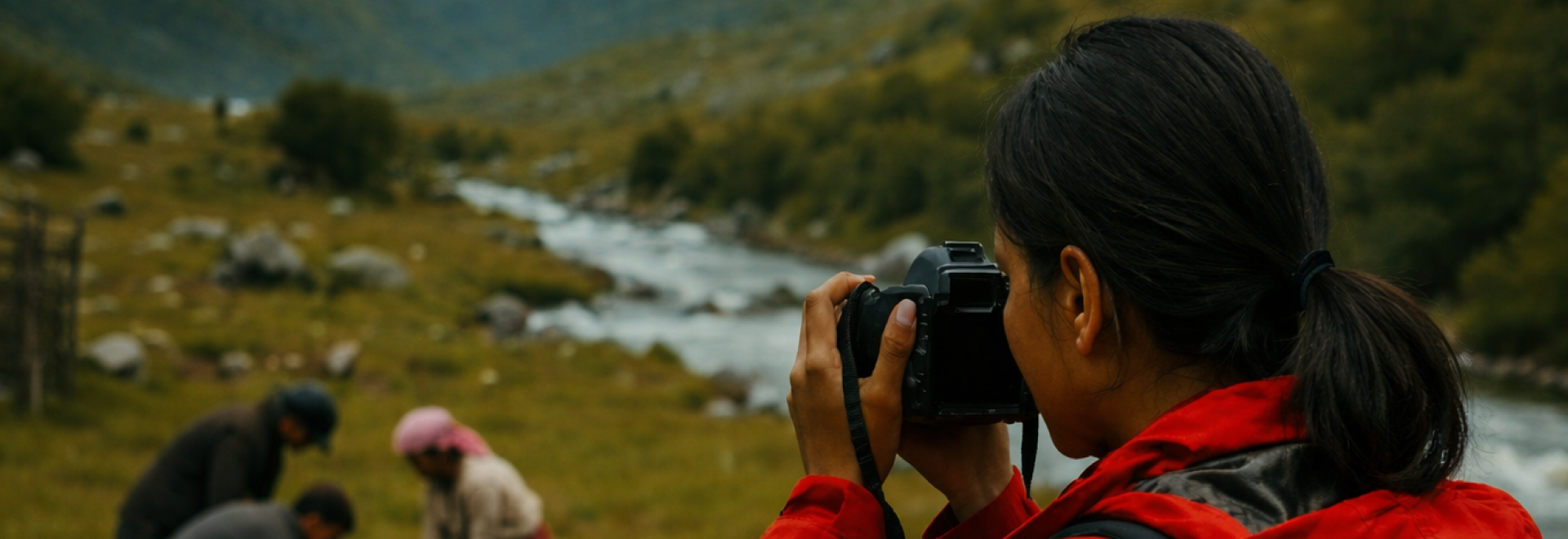
The Himalayan Fellowship positions mountain landscapes and communities as pedagogical partners not research subjects. We believe profound learning emerges from the interplay of experience, reflection, and action.
This isn't a conventional field program focused on data extraction. It is a transformative immersion: a sustained encounter with ecological and cultural complexity that challenges assumptions, builds new frameworks, and cultivates the humility essential to meaningful scholarship.
The Himalayan Context
The Himalayas offer one of the world's most compelling settings for understanding climate change, biodiversity, cultural resilience, and social-ecological systems. Beyond the crisis narrative of glacial retreat and outmigration lies a more textured reality: communities embodying millennia of ecological wisdom indigenous governance systems, sacred groves protecting biodiversity, and agricultural traditions that sustain crop diversity as a form of climate adaptation.
These societies are not passive victims but active agents navigating transformation while stewarding globally significant natural systems. The fellowship encourages participants to move beyond extractive research toward epistemic reciprocity valuing reflection and dialogue over data collection, and co-producing knowledge with communities rather than about them.
Impact & Outcomes
Our Commitment
As one of the biggest universities located in the Himalayan region, our vision is anchored in two intertwined commitments:
First, the fellowship is a deliberate pedagogical response to a generation growing up amid pervasive screens, constant connectivity, and accelerated attention cycles. We want our students to step away from the flatness of digital mediation and encounter the textured reality of place: cold rivers, steep paths, unstructured time, silence, and the unpredictability of weather and human encounter. Immersion cultivates forms of attention, patience, and presence that contemporary life rarely demands but serious learning quietly requires.
Second, the fellowship expresses our social and ethical responsibility as a university rooted in Uttarakhand and the wider Indian Himalayan region. We are not simply using mountains and communities as laboratories; we are seeking to participate in co-creating futures that are more just, sustainable, and life-affirming for those who call these landscapes home. Community engagement here is not charity or "outreach," but a commitment to mutual learning and shared work.
Driving real-world impact, the Himalayan Fellowship aligns with key UN Sustainable Development Goals through on-ground learning and action.
How the Fellowship Works
Our design reflects Kolb's (1984) experiential learning cycle:
| Mode | In Practice |
|---|---|
| Concrete Experience | Immersion in communities and landscapes |
| Reflective Observation | Daily journaling and contemplative practice |
| Abstract Conceptualization | Connecting observations to theory |
| Active Experimentation | Refining questions through iterative inquiry |
We provide scaffolding guidance for safety, ethics, and coherence combined with substantial autonomy for questions to emerge organically from encounter.
| Element | Why It Matters |
|---|---|
| 4 weeks | Depth requires sustained immersion |
| Solo travel | Creates space for self-examination and observation |
| Homestays | Enables informal learning and cultural exchange |
| Public transport | Builds resourcefulness and reduces footprint |
| Multimodal documentation | Different forms capture different dimensions |
| Mentorship as dialogue | Mentors ask questions, not evaluate |
| Date | Milestone |
|---|---|
| March 31 | Call for Applications Opens |
| April 7 | Application Deadline (11:59 PM IST) |
| April 8–14 | Application Review |
| April 15 | Shortlist of Candidates for Interviews Announced |
| April 16–21 | Interviews |
| May 1 | 35 Candidates Confirmed for Preparatory Module |
| May 4 | Orientation |
| May 5–31 | Coursework |
| June 1–26 | 4-Week Field Immersion |
| July 1–15 | Final Portfolio Submission Window |
| July 16–21 | Cohort Reflection & Public Showcase |
UPES reserves the right to modify the Himalayan Fellowship program and timelines at their discretion.
Experience & Learning
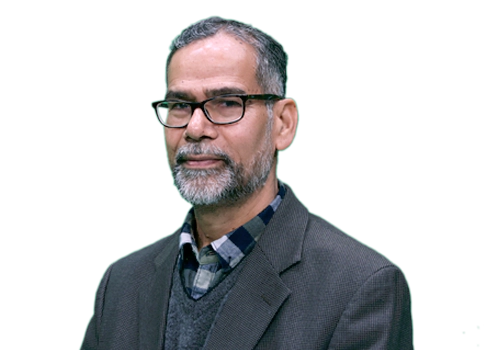
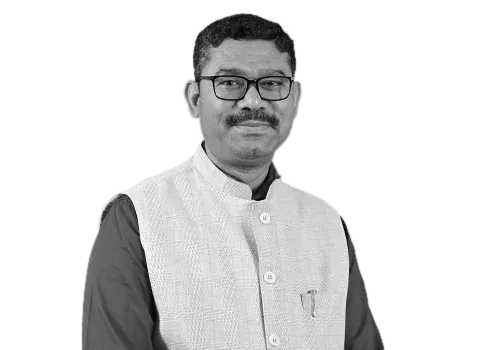
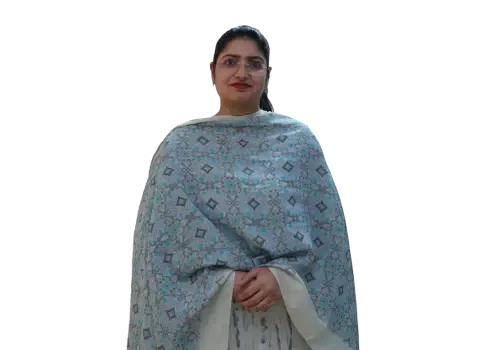
Our Mentors





















Gallery
Will Be Updated Soon
Contact Us
Himalayanfellowships@ddn.upes.ac.in
Alternate Contact:
Dr. Ruchika Rai
Project Lead and Mentor
ruchika.rai@ddn.upes.ac.in


