- Home
- Faculty
- School of Advanced Engineering
- Applied Science
- Dr. Nirmal Kumar
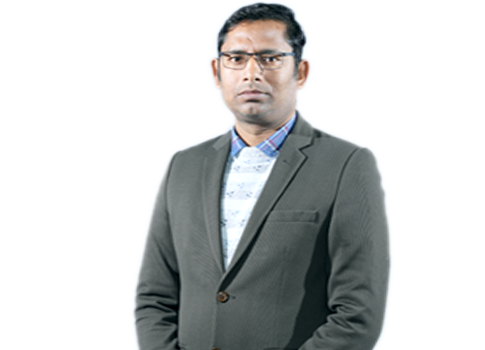
Dr. Nirmal Kumar
Assistant Professor (Senior Grade), School of Advanced Engineering, Applied Science Cluster (Physics), UPES
Profile Summary
Dr. Nirmal Kumar has extensive experience in developing nanomaterials through mechanical milling, with a focus on tuning their composition and driving solid-state reactions using mechanical energy. He specializes in materials engineering, and his research integrates advanced characterization techniques, particularly transmission electron microscopy. His contributions have earned recognition in Stanford University’s 2024–25 global list of the top 2% of scientists.
He is the recipient of several prestigious fellowships, including the Newton International Fellowship from the Royal Society (UK), the PBC Fellowship from the Council for Higher Education (Israel), the Kreitman Postdoctoral Fellowship by the Kreitman Foundation, Israel, and Fellowship of the Higher Education Academy (FHEA) from Advance HE (UK).
He has published research in renowned journals such as Nature Asia Materials, ACS Catalysis, Nano Energy, Scientific Reports, Materials Today Energy, Langmuir, and International Materials Reviews. He is currently developing the Mechanical Energy Driven Nanomaterials (MEDN) Lab at UPES, Bidholi, Dehradun.
Work Experience
Following his Ph.D. in Materials Science and Engineering from IIT Kanpur in 2018, Dr. Kumar conducted pioneering research at Ben-Gurion University of the Negev, Israel, where he applied nanomechanical techniques to study organic-inorganic material interactions using AFM.
He subsequently spent three years at London South Bank University, UK (2020–2023), contributing to advanced materials science research on nanocrystalline high entropy alloys. On returning to India, he held an ad hoc postdoctoral fellowship at IIT Kharagpur in the Department of Metallurgy and Materials Engineering. Prior to his doctoral studies, he worked as a Project Fellow at ARCI, Hyderabad.
Research Interests
Nanocrystalline high entropy alloys; composition-controlled nanoparticles by cryomilling for functional applications; critical and rare-earth metal recycling through mechanochemical processes; electron microscopy for nanomaterials; catalytic and sensing materials development; electrochemical reaction studies.
Teaching Philosophy
Dr. Kumar’s teaching philosophy is rooted in creating an engaging, inclusive, and concept-driven learning environment that encourages curiosity and critical thinking. He believes students learn best when theory is connected to real-world applications, especially in the design of advanced materials and engineered systems.
He aims to simplify complex concepts through clear explanations, demonstrations, and practical examples that help students develop analytical ability and scientific confidence.
Courses Taught
Solid State Physics at undergraduate and postgraduate levels; Professional and Research Ethics at undergraduate and postgraduate levels; Engineering laboratory courses for undergraduate students. He also holds expertise in teaching Materials Science and Nanotechnology.
Awards and Grants
Multiscale Study of a Novel Biomatter–Nanoparticle Interaction Mechanism for Fast Detection of Viruses, funded by the Royal Society, London, UK (2020–2023), £140,000 (Principal Investigator).
Hubert Curien Alliance Grant (2021–2022), funded by the British Council in collaboration with the University of Lille, France, £10,000 (Co-Principal Investigator).
Recycling Contaminated Unwanted Glass Waste Using Thermal Spraying, funded by Manufacturing Transforming Foundation Industries Network+ (2022–2023), £30,000 (Principal Investigator).
Scholarly Activities
Dr. Kumar is deeply engaged in materials research and has published over 60 peer-reviewed international journal articles, one Indian patent, and several book chapters. He has also served as reviewer for numerous international journals and is actively involved in professional and editorial communities.
His academic roles include Lead Guest Editor for Discover Sustainability (Springer), Visiting Fellow at London South Bank University, Editorial Board Member of Biomaterials and Polymer Horizon, ECR Editorial Board Member of Nanofabrication (De Gruyter), and Guest Editor for Materials (MDPI).
He is a life member of the Electron Microscope Society of India and the Society for Materials Chemistry, India, and a Chartered Member of the Institution of Chemical Engineers (IChemE).
Contact


