- Home
- Faculty
- School of Advanced Engineering
- Applied Science
- Prashant Kumar
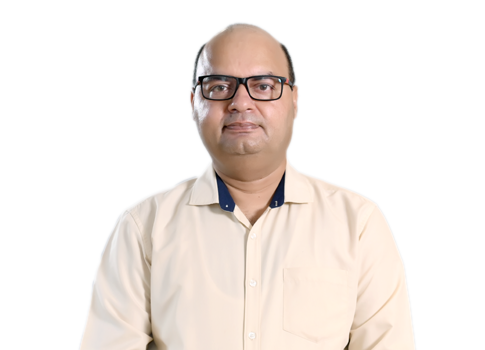
Prashant Kumar
Professor, School of Advanced Engineering, UPES
Profile Summary
Prof. Prashant Kumar is a distinguished academic and leading authority in quantum materials, recognized for pioneering scientific innovations and impactful global collaborations. He earned his bachelor’s degree from Banaras Hindu University (2001), master’s from Jawaharlal Nehru University (2003), and doctorate from the University of Hyderabad (2009). He has successfully mentored 7 PhD scholars, 9 MTech scholars, and 4 postdoctoral researchers.
His research has led to the discovery of multiple novel 2D materials, including molybdenene, goldene, beryllene, and α-PbO. He has also advanced methods such as microwave-assisted substitutional doping, 2D–2D hybridization, laser reduction of graphene oxide, and laser-induced unzipping of carbon nanotubes. With more than 140 publications, an h-index of 44, and over 6,170 citations, he has consistently been listed among the Top 2% Scientists globally (Elsevier–Stanford, 2023–2025).
Work Experience
He is currently Professor in the School of Advanced Engineering, UPES Dehradun. Prior to joining UPES, he served as Senior Materials Scientist (Associate Professor) at the University of Newcastle, Australia and GNS Science, New Zealand (2021–2025). Earlier, he was faculty at IIT Patna (2015–2021). He also held postdoctoral positions at Purdue University (2012–2015) and JNCASR Bangalore (2009–2012), and was a visiting scientist at Purdue University under the IUSSTF programme.
Research Interests
Low-cost synthesis of emerging 2D materials | Graphene, borophene, phosphorene, GaN | Quantum materials | Band-gap engineering | Carrier injection through graphitic doping | 2D–2D hybridization | Electronics and optoelectronics | Thermoelectrics | SERS sensing | Brain–computer interfaces | Magnetic and superconducting Xenes | Designer metamaterials | Electrocatalysis.
Teaching Philosophy
Prof. Kumar’s teaching philosophy centers on fostering curiosity, critical thinking, and independent problem-solving. He creates an inclusive, student-centered environment where learning is driven by inquiry, collaboration, and real-world relevance. He emphasizes conceptual understanding along with hands-on practice through research-inspired examples and active learning methods. By mentoring students to question assumptions, communicate effectively, and persist through challenges, he aims to develop confident and creative thinkers prepared to contribute meaningfully to society.
Courses Taught
Thermodynamics | Waves and Optics | Physics of Materials | Magnetism and Superconductivity | Synthesis and Characterization of Nanomaterials | Applications of Nanomaterials | Thin-Film Deposition Techniques | Nanoscale Devices and Sensors.
Awards and Grants
Innovation Award from Intellectual Venture (2012) | SERB Ramanujan Fellowship (2015) | CRS Young Scientist Award (2022) | Fellowship of Indian Chemical Society (2023). He received research support of INR 1.4 crore from the Department of Science and Technology, Government of India under the SERB Ramanujan Fellowship. He is a life member of the American Physical Society and SPIE, and has served as editor and reviewer for leading journals including Nature, Wiley, and ACS.
Scholarly Activities
Prof. Kumar has published in premier journals such as Nature Nanotechnology, Advanced Materials, Advanced Functional Materials, ACS Nano, PNAS, and Chemical Society Reviews. He has collaborated extensively with researchers at globally renowned institutions including the University of California, Purdue University, Hokkaido University, RWTH Aachen University, and the University of Newcastle.
He has delivered plenary lectures and chaired sessions at major conferences such as ICAM 2023 and ICEAN 2022/2024. He has also delivered invited talks at Purdue University, University of Wisconsin–Milwaukee, IISc Bangalore, IIT BHU, and IIT Hyderabad. His scholarly service includes acting as an international thesis examiner for NTU Singapore and IIT Guwahati. Additionally, he has established advanced research facilities in PLD, lasing action, laser-shock nanomanufacturing, 2D materials synthesis, and microwave-based synthesis laboratories.
Contact


