- Home
- Faculty
- School of Advanced Engineering
- Electrical
- Dr. Sunita Saharan
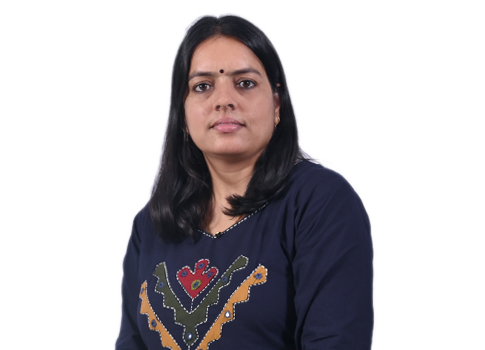
Dr. Sunita Saharan
Assistant Professor (Senior Scale), School of Engineering, UPES
Profile Summary
Dr. Sunita Saharan is an accomplished researcher in computational materials science and energy storage technologies. Her work focuses on the computational investigation of 2D materials using advanced Density Functional Theory (DFT) methodologies. She completed her Ph.D. in Computational Studies of 2D MXenes for Optoelectronic and Energy Storage Applications using DFT from NIT Kurukshetra in 2025 and earned her M.Tech in VLSI Design from Banasthali Vidyapith, Rajasthan. With ten publications in reputed international journals, including those by the American Chemical Society, RSC Nanoscale, and Wiley, she has made significant contributions to next-generation energy materials. Her research focuses on the electrochemical, optical, and hydrogen storage behaviour of 2D materials for ion-batteries, solar cell, and hydrogen storage applications. She employs DFT-based methods to analyse diffusion pathways (CI-NEB), adsorption energies, OCV, AIMD stability, Bader charge redistribution, and electronic structure (band structure, PDOS, DOS) and optical properties (absorption coefficient, reflectivity, refractive index etc.). She continues to advance computational methodologies that drive the discovery of efficient and sustainable energy materials.
Work Experience
Before joining UPES, Dr. Sunita completed her doctoral research at NIT Kurukshetra (NIT-K), gaining extensive expertise in DFT simulations, electronic structure calculations, and optical modelling. She has experience working with tools such as Quantum-ATK, Cadence, Silvaco, and Xilinx Vivado. Prior to enrolling in doctoral program at NIT-K she worked as an assistant professor for 3.5 years.
Research Interests
2D MXenes | Ion Batteries | Hydrogen Storage | Solar Cell Materials | Optical Properties | Density Functional Theory | Diffusion Mechanisms | Electronic Structure Modelling | Molecular Dynamics Simulations
Teaching Philosophy
Dr. Sunita believes that strong conceptual foundations empower students to innovate. Her teaching approach connects core theoretical principles with real research problems, encouraging students to understand not only what works but why it works. She promotes analytical thinking, problem-solving, and hands-on learning through simulations and case-based discussions.
Courses Taught
Electronic Devices and Circuits | Digital System Design | VLSI Design | Analog Electronics | VHDL
Awards and Grants
She received UGC NET JRF fellowship for 2020 to 2025 for Ph.D.
Received “Prof. Subramanian S. Iyer Best Participant Award" and Prize Money.
Scholarly Activities
Dr. Sunita is actively involved in computational materials research focusing on the energy storage performance and optical response of 2D MXenes. She has published widely in SCI and Web of Science indexed journals, including ACS JPCC and RSC Nanoscale, and has contributed a book chapter on functional nanomaterials. Dr. Sunita continues to contribute to interdisciplinary research connecting materials modelling, renewable energy technologies, and sustainable energy solutions.
Dr. Sunita actively contributes to the scientific community by reviewing manuscripts for prestigious journals, including ACS JPCC, Scientific Reports, Physica Scripta, Advanced
Composites and Hybrid Materials and Nanotechnology.
Contact


