- Home
- Faculty
- School of Advanced Engineering
- Energy
- Dr Seema Singh
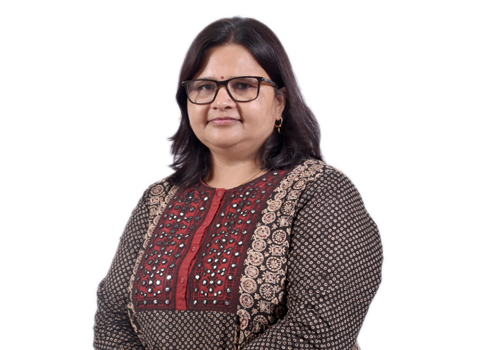
Dr Seema Singh
Assistant Professor (Selection Grade), Energy Cluster, School of Advanced Engineering, UPES
Profile Summary
Dr. Seema Singh completed her M.Tech. in Advanced Chemical Analysis and Ph.D. in Chemical Engineering from the Indian Institute of Technology Roorkee. Subsequently, she joined an international postdoctoral fellowship at National Taiwan University, Taiwan. Her research work has focused on multiple domains of science and engineering, including catalysis, electrocatalysis, advanced oxidation processes, fabrication engineering, nanotechnology, persulfate and peroxymonosulfate activation, in-situ generation of H₂O₂, fate and transport of emerging contaminants, waste-to-resource recovery, CO₂ capture, and H₂O splitting.
Her teaching and scholarly contributions, reflected through an h-index of 23, emphasize innovation, sustainable development goals (SDGs), and practical problem-solving. Her academic work demonstrates a strong commitment to addressing energy and environmental challenges through impactful scientific research.
Work Experience
Before joining UPES, Dr. Singh accumulated 14 years of teaching and research experience at national and international institutions. She has worked at National Taiwan University, Taiwan, IIT Roorkee, Chitkara University, and Uttaranchal University. She received the Ministry of Science and Technology (MOST) Fellowship during her postdoctoral tenure at NTU and the DST Fellowship during her post-PhD research at IIT Roorkee. Her experience includes publications, mentoring research interns, and contributing to global research collaborations aligned with SDGs.
Research Interests
Synthesis, Characterization and Application of Materials | 2D Materials | Nanometal–Carbon Hybrids | Heterojunction Materials | Wastewater Treatment | Catalysis | Electrolysis | Photocatalysis | CO₂ Capture and Utilization | Biomass Valorization | Waste-to-Energy Technologies | E-waste Recycling | Life Cycle Assessment | Circular Economy.
Teaching Philosophy
Dr. Singh believes teaching is an energetic, two-way process based on active student engagement. Her teaching integrates strong fundamental concepts with real-world science and engineering challenges. She aims to cultivate scientific confidence, research aptitude, analytical thinking, and an innovation-driven mindset among students.
Courses Taught
Electrochemical Chemistry | Advanced Chemical Analysis | Nanomaterials and Environmental Applications | Physical Chemistry of Materials | Renewable Energy Technologies | Separation and Purification. She has also supervised project-based coursework focused on material characterization, photocatalytic performance, pollutant remediation, and electrocatalyst development.
Awards and Grants
Dr. Singh has received prestigious national and international fellowships for academic excellence. She was awarded the Ministry of Science and Technology (MOST) Fellowship for postdoctoral research at National Taiwan University, Taiwan. She also received MHRD, CSIR, and DST fellowships from the Government of India during her M.Tech. and Ph.D. studies. She has additionally received multiple outstanding research performance awards in India and abroad.
Scholarly Activities
Dr. Singh has an active research profile in emerging pollutant remediation, waste-to-energy conversion, e-waste management, and sustainable environmental technologies. She has published extensively in high-impact Scopus and Web of Science indexed journals. Her scholarly contributions include synthesis of nanometal–carbon hybrid materials for energy and environmental applications, thermodynamic and kinetic analyses of pollutant degradation, and advanced material synthesis and characterization.
She has authored more than 65 research papers, review articles, book chapters, and books. Her strong international collaborations across India, Taiwan, Australia, Italy, and Slovenia have strengthened global scientific exchange in energy and environmental sciences. Her work aligns closely with SDGs, emphasizing life cycle assessment and circular economy approaches that integrate waste remediation with clean energy production.
Contact


