- Home
- Faculty
- School of Computer Science
- Dr. Arnab Chatterjee
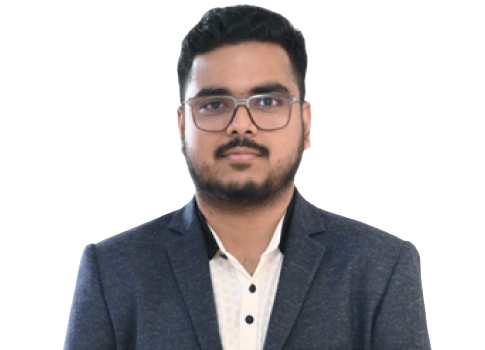
Dr. Arnab Chatterjee
Assistant Professor – Senior Scale
Profile Summary
Dr. Chatterjee is an Assistant Professor (Senior Scale) at School of Computer Science, UPES, Dehradun, specializing in probabilistic combinatorics and algorithms. He earned his PhD in Computer Science under the supervision of Prof. Dr. Amin Coja-Oghlan from Technische Universität Dortmund, Germany and works on random combinatorial structures including random graphs, matrices, and constraint satisfaction problems, with implications for algorithm design and analysis. He has also contributed to applied data science in the pharmaceutical sector and actively collaborates across mathematics, theoretical computer science, and statistical physics.
Work Experience
Before joining UPES, Dr. Chatterjee gained experience across academia and industry. He is currently an Assistant Professor (Senior Scale) at UPES, Dehradun (Jan 2026–present). Previously, he worked as a Doctoral Research Assistant at Technische Universität Dortmund, Germany (Jan 2023–Dec 2025), leading collaborative research projects, team coordination, and large-scale statistical analysis, particularly in random satisfaction problems. He also served as an Associate Data Scientist at Axtria India Pvt. Ltd. (Jul 2021–Dec 2022), building automated key-driver analytics and data pipelines using Python/R, SQL, and digital/sales analytics.
Research Interests
Probabilistic combinatorics | Random graphs and random matrices | Constraint satisfaction problems | Randomized algorithms | Design and analysis of algorithms | Statistical physics-inspired methods | Large-scale statistical data analysis | Applied analytics in pharmaceutical data science.
Teaching Philosophy
Dr. Chatterjee’s teaching philosophy is grounded in the belief that conceptual clarity and rigorous reasoning are the foundations of deep learning. He encourages students to connect theory with computation by blending proofs, structured problem-solving, and implementation-oriented thinking where appropriate. He fosters an interactive classroom culture that values curiosity, precise communication, and independent reasoning, helping students build confidence in tackling unfamiliar technical challenges. His approach emphasizes transferable skills abstraction, algorithmic thinking, and disciplined analysis that remain valuable across research and industry contexts.
Courses Taught
Probability, Computing and Statistics | Fundamentals of Data Science | Efficient Algorithms | Embedded Systems | Complexity Theory | Cyber-Physical Fundamental Systems | Randomized Algorithms | Data Structures & Algorithms.
Awards and Grants
Dr. Chatterjee was selected for an international research visit at the University of California, Irvine (Aug–Oct 2025) under Prof. Asaf Ferber. He holds an NPTEL Elite certification in Cryptography & Network Security (IIT Kharagpur) and completed a TEQIP-III sponsored short course on Recent Trends in Machine Learning & Soft Computing (NIT Durgapur). He also secured 19th rank at the state level in the Higher Secondary Examination.
Scholarly Activities
Dr. Chatterjee is an active researcher in probabilistic combinatorics and algorithms, focusing on random combinatorial structures and their role in understanding phase transitions and designing efficient algorithms. His work includes publications in major theory venues such as RANDOM (2024) and ICALP (2025), with reported journal submissions/acceptances including Journal on Theory of Computing and Combinatorics, Probability and Computing (Cambridge). He has delivered invited talks at the University of Minnesota (USA), UC San Diego (USA), Technical University of Munich (Germany), Universität Hamburg (Germany), and the ADYN research group (Germany), and presented at forums including RS&A (TU Vienna) and ICALP (Aarhus University, Denmark). Additionally, he delivered an invited talk at Stanford University (Department of Statistics). He contributes to the community through peer review for ICALP, STOC, RS&A, and the Electronic Journal of Probability. He has also co-supervised multiple Bachelor’s theses at TU Dortmund on topics such as hashing and primality testing.
Contact


