- Home
- Faculty
- School of Computer Science
- Dr. Pranshu Mandal
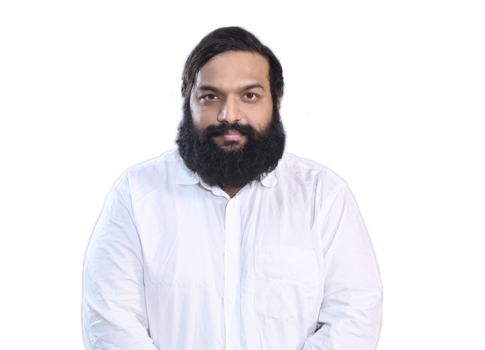
Dr. Pranshu Mandal
Assistant Professor – Senior Scale
Profile Summary
Dr. Pranshu Mandal is an astronomer and data scientist with a Ph.D. in Astronomy from the University of Tsukuba, Japan, and a BS-MS dual degree in Physics from IISER Trivandrum, India. His doctoral research centred on developing the complete data analysis pipeline and image synthesis framework for the 100 GHz MKID camera at the Nobeyama Radio Observatory 45 m telescope. He created the Chunked Principal Component Analysis (ChunkedPCA) method a novel background subtraction algorithm for multi-pixel astronomical cameras and participated in two commissioning campaigns of the instrument. Beyond astronomy, he has contributed to machine learning research in biomedical signal processing, co-authoring work on self-attention neural networks for pre-ictal event detection in neonatal EEG data. With over five years of teaching experience across programming, data science, and machine learning to more than a thousand graduate students, he currently serves as Assistant Professor (Senior Scale) at UPES, Dehradun. His research bridges astronomical instrumentation, signal processing, and modern ML methods, with a keen interest in applying these skills to observational cosmology and large-scale spectroscopic surveys.
Work Experience
Assistant Professor (Senior Scale) UPES, Dehradun (Jan 2026–Present): Teaching Machine Learning and Programming at BCA and M.Tech levels; developing advanced ML curricula. **Faculty of Data Science** IISER Trivandrum (Jan 2023–May 2025): Taught 10+ courses in Python, R, C, and C++ to 1000+ graduate students; applied ML and statistical methods to astronomical, medical, and geospatial datasets. **Doctoral Researcher** University of Tsukuba, Japan (Oct 2016–Oct 2020): Built the end-to-end data analysis pipeline for the Nobeyama MKID camera; developed ChunkedPCA; participated in two commissioning campaigns.
Research Interests
Astronomical instrumentation, data analysis pipeline development, and the application of statistical and machine learning methods to observational data. Specific interests include signal processing for mm-wave observations, HEALPix-based map-making, dimensionality reduction techniques (PCA, autoencoders), and attention-based architectures for scientific time-series analysis. Currently eager to apply these skills to observational cosmology particularly large spectroscopic galaxy surveys such as DESI spanning Lyman-alpha forest analysis, spectroscopic pipeline development, and systematic effect mitigation for cosmological parameter estimation.
Teaching Philosophy
Dr. Mandal believes in making complex computational and statistical ideas accessible through hands-on, problem-driven learning. His courses emphasise practical engagement with real scientific datasets astronomical, medical, and geospatial enabling students to develop intuition alongside technical proficiency. Over five years, he has designed and delivered 10+ courses across Python, R, C, C++, data science, and machine learning, supervising student projects that apply neural networks and dimensionality reduction to diverse domains. He is committed to bridging the gap between theoretical methods and applied scientific computing.
Courses Taught
Prof. Mandal has taught courses on Data Science, Statistics, and Programming of mathematical models.
Awards and Grants
Prof. Nelson was nominated for the Teaching Excellence Award & Academic Excellence Award. He has contributed as a Co-Project Manager for the CPPGG (Centre for Policy Planning and Good Governance) projects received by UCIE-UPES with the field data provided by the state government of Uttarakhand. This application aimed to facilitate farmers in advertising their product's availability to merchants and expert consultants. He has also received Best Paper Awards in various conferences including ICETDT-2021 and ASTMLS-2020.
Scholarly Activities
Dr. Mandal has authored and co-authored five publications spanning astronomical instrumentation, data analysis methodology, and biomedical machine learning. His first-author work on the Chunked PCA method for background subtraction in radio cameras (arXiv:2508.16155) is currently under peer review. He is co-author on the development and commissioning paper of the 100 GHz MKID camera (Honda et al., URSI Radio Science Letters, 2022) and on the MKID camera data acquisition system (Nagai et al., J. Low Temp. Phys., 2018). In a cross-disciplinary collaboration, he contributed to a publication in *Computers in Biology and Medicine* (2025) on self-attention neural networks for pre-ictal epileptic event detection from neonatal EEG data. His earlier work includes building and documenting a Ku-band radio telescope from commercial components (arXiv:1601.02982). He presented a contributed talk at the NIKA2 conference in Grenoble, France (2019), on the beam characteristics of the Nobeyama MKID camera. He has hands-on experience from two MKID camera commissioning campaigns (2016, 2018) and a summer research project on TMT polarimetry at IUCAA, Pune.
Contact


