- Home
- Faculty
- School of Design
- Sabyasachi Biswas
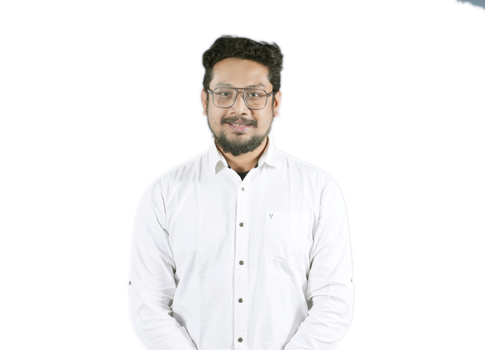
Sabyasachi Biswas
Assistant Professor - Senior Scale
Profile Summary
Assistant Professor Sabyasachi Biswas is recognised for his work in AI-integrated sustainable design and human-centred innovation. His distinctive research focuses on the intersection of artificial intelligence, sustainable materials, and inclusive design, addressing critical societal challenges. With around five years of teaching experience across various design institutions in India, he is committed to nurturing research-driven creativity and holistic design proficiency among students.
His scholarly contributions include published work on AI-driven services, sustainable built environments, and traditional craft heritage preservation. A recipient of the Teaching Excellence Award at DIT University, Prof. Biswas has successfully mentored more than 100 design students in developing industry-standard solutions for complex real-world problems. His pedagogical approach emphasizes iterative problem-solving, technological fluency, and the integration of artistic expression with practical design outcomes.
Work Experience
Before joining UPES, Prof. Biswas served at DIT University (2023–2025), where he received the Teaching Excellence Award, and at UID, Karnavati University, Ahmedabad (2023), focusing on industrial design education and UX/UI design.
Earlier, he worked as Design Faculty at ImaginXP and as Faculty Coordinator at ESEDS School of Design, Kolkata, where he directed the B.Sc. Interior Design program. His career reflects a strong commitment to design education excellence, interdisciplinary collaboration, and bridging academic research with industry practice.
Research Interests
Artificial Intelligence in Design | Sustainable Materials and Innovation | Human-Centered and Inclusive Design | Co-design for Accessibility | Interaction Design for Emerging Technologies | Built Environment Retrofitting with UX Design | Craft Heritage Documentation and Cultural Preservation | AI-Produced Artwork and Deep Neural Networks | Digital Platforms for Social Impact | Service Design Ecosystems
Teaching Philosophy
Sabyasachi's teaching philosophy is grounded in creating a learning environment that fosters research-driven creativity, technological fluency, and holistic thinking. He integrates structured mentorship with iterative feedback cycles, where students engage with authentic real-world problems and datasets.
His approach emphasizes curiosity, deep comprehension, creative exploration, and systematic analysis, encouraging students to develop strong critical thinking skills. By balancing subject mastery with empathy and adaptability, he nurtures collaborative learning spaces that bridge artistic expression with practical design outcomes.
Courses Taught
Computer-Aided Design (CAD) | Interior Design | Interaction Design | UX/UI Design | Product Design | Design Fundamentals
Awards and Achievements
Recipient of the Teaching Excellence Award at DIT University (2023–2025), recognising his commitment to pedagogical innovation and student mentorship. His research has generated five peer-reviewed publications indexed on Crossref with DOI validation, demonstrating scholarly impact in AI applications, sustainable design, and human-centered innovation.
Scholarly Activities
Sabyasachi has led pedagogically grounded research initiatives exploring the convergence of artificial intelligence, sustainability, and human-centered design. His scholarly work includes five peer-reviewed publications (2023–2025), including four book chapters addressing AI-driven mental health solutions, sustainable campus mobility, human-centric built environments, and AI-driven service evolution.
A journal article published in Shodh Kosh documented traditional conch shell carving heritage in Bishnupur, reflecting his commitment to cultural preservation and craft-based design research. His master's thesis, Corkly: A Material Exploration on Cork, advanced sustainable product innovation using locally sourced Indian materials.
Through collaborative knowledge exchange, he mentors students as co-researchers, fostering a culture of evidence-based design thinking and societal contribution.
Contact
Email: sabyasachi.biswas@upes.ac.in


