Quantum Computing Jobs & Salary for Seekers in India
- UPES Editorial Team
- Published 08/12/2025


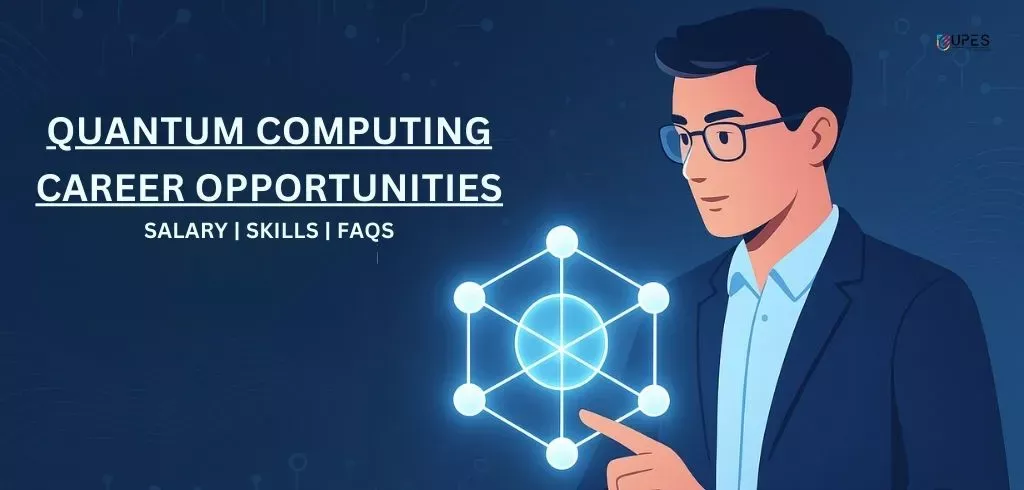
- Quantum computing jobs in India: How big is the opportunity really?
- Quantum computing jobs and salary: What can you actually earn?
- Quantum Computing Jobs in India: Who is Hiring, and for what?
- Quantum Computing Jobs for Freshers: Skills, Eligibility & Entry Routes
- Core Skills you should Build
- Quantum computing developer jobs: Roles, Tech Stack & day-to-day work
- FAQs on Quantum Computing Jobs in India
Quantum computing sounds like sci-fi—qubits, superposition, crazy processing speeds. But then you start hearing about quantum computing jobs, big salaries, and India’s National Quantum Mission, and a question pops up:
“Is this actually a real career path for me in India, or just hype?”
If you’re a student or young professional trying to decide between “normal” tech roles and emerging areas like quantum, the confusion is real. This blog will walk you through what quantum computing jobs look like in India today, what kind of salaries you can realistically expect, how freshers can enter the field, and how a strong foundation like B.Tech CSE-Mathematics & Computing can set you up for these future-ready roles.
Become future-ready with our Computer Science programs
Know MoreQuantum computing jobs in India: How big is the opportunity really?
Let’s start with the big picture: quantum in India is early stage but serious, backed by both government and big tech.
- The Government of India has launched the National Quantum Mission (NQM) with a budget of ₹6,003.65 crore (2023–24 to 2030–31) to build a full quantum ecosystem—research hubs, industry projects, and talent.
- IBM and TCS are collaborating with the Government of Andhra Pradesh to deploy India’s largest quantum computer (IBM Quantum System Two with a 156-qubit processor) at the upcoming Quantum Valley Tech Park in Amaravati. (Source- IBM)
- States like Karnataka have announced their own Quantum Missions and action plans to build a $20 billion quantum economy by 2035, complete with quantum parks and startup support. (Source-ET)
On the industry side, companies like TCS, Infosys, QNu Labs, QpiAI and other startups are working on quantum-safe cryptography, quantum algorithms, and hybrid AI–quantum solutions.
If you go on job portals like LinkedIn or Indeed and search for quantum computing jobs in India, you’ll usually see a mix of:
- Research intern / research associate (quantum)
- Quantum algorithm / quantum software engineer roles
- ML/AI engineer roles with exposure to quantum
- Trainers or instructors for quantum courses
- “Emerging tech” roles where quantum is one of the focus areas
So, is there a massive number of openings right now? No, not yet.
Is there a growing, high-potential niche that will expand sharply over the next 5–10 years? Definitely yes, especially if you build strong computer science + math foundations today.
Quantum computing jobs and salary: What can you actually earn?
This is the question everyone secretly wants answered. Let’s look at what different sources tell us about quantum computing jobs and salary in India:
- A recent salary overview suggests that freshers in quantum roles can earn around ₹9–12 LPA, especially in private R&D and quantum tech firms.
- Glassdoor estimates the base pay for Quantum Computing Developers in India at ₹8–15 LPA, with an average around ₹9 LPA.
- Salary survey platforms tracking “Engineer – Quantum Computing” show an average annual salary of ~₹24–26 LPA, with entry-level (1–3 years’ experience) around ₹17–18 LPA and more experienced engineers crossing ₹25–30 LPA, especially in metro hubs like Delhi.
Putting this together, here is an indicative snapshot:
| Role / Profile | Experience level | Typical Indian salary range* | Where these roles usually exist |
Research Intern – Quantum | Final-year / fresher | ₹3 – 6 LPA (stipend/CTC) | IITs, IISc, research labs, deep-tech startups |
Quantum Computing Developer | 0–3 years | ₹8 – 15 LPA | Quantum startups, IBM, R&D-heavy firms |
Quantum Engineer / Quantum Algorithm Dev | 1–3 years (strong background) | ₹17 – 25 LPA | R&D centres, specialised enterprise units |
Senior Quantum Engineer / Scientist | 5+ years, higher degree | ₹30 LPA and above | Global R&D labs, MNC innovation centres, deep-tech cos |
Sources: Naukri, Indeed, Glassdoor | |||
*Ranges are indicative and based on salary surveys & reports; actual figures vary by company, city, qualifications and your negotiation.
Outside India, quantum software/engineering roles often start around $100k+ per year in major tech markets, which is another reason many Indian students aim to build strong fundamentals here and then pursue higher studies or global roles later.
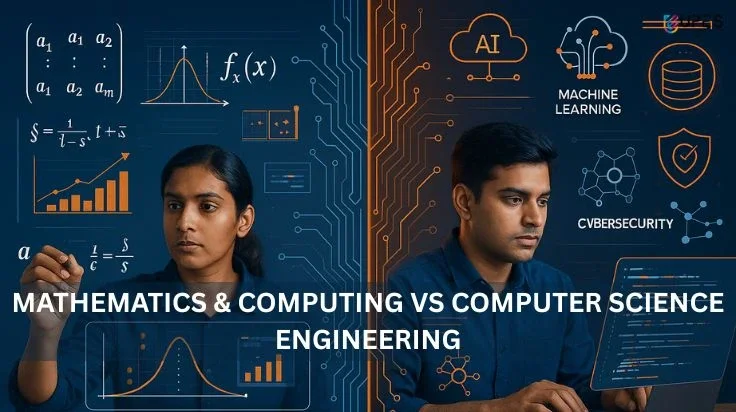
When comparing BTech CSE Vs BTech Mathematics and Computing, CSE is ideal for those looking to build and develop software applications, Mathematics & Computing is for students who want to work on the theoretical foundations of computing, AI, and complex mathematical applications. The bottom line: quantum computing jobs are fewer but generally better paid than average IT roles, especially as you gain experience and specialise.
Quantum Computing Jobs in India: Who is Hiring, and for what?
Zooming in further on quantum computing jobs in India, the roles tend to fall into a few broad categories:
1. Research & Academia
- Roles: Research assistant, PhD scholar, post-doc, project associate
- Where: IITs, IISc, IISERs, TIFR, and other research institutes and centres set up under the National Quantum Mission
- Work type:
- Designing quantum algorithms
- Working on quantum error correction\
- Quantum communication, cryptography, and sensing
2. Industry R&D and Product Development
- Roles: Quantum engineer, quantum software developer, algorithm designer
- Where: Global tech majors (IBM, etc.), Indian IT giants (TCS, Infosys), and specialised startups (QNu Labs, QpiAI, others)
- Work type:
- Building proof-of-concepts for finance, logistics, healthcare, cybersecurity
- Integrating quantum APIs (like IBM Quantum, AWS Braket) into industry workflows
3. Hybrid and Ecosystem roles
- Roles: Emerging tech engineer (AI + quantum), quantum trainer, developer advocate
- Where: EdTech platforms, training companies, innovation labs, state initiatives like Quantum Valley in Andhra Pradesh or Karnataka’s quantum parks
- Work type:
- Teaching quantum programming (Qiskit, Cirq, etc.)
- Building developer communities
- Evaluating use-cases and doing early-stage pilots
Many current job descriptions mention awareness of quantum computing, even if the day-to-day role is still mostly classical software/ML. That’s your signal that the field is transitioning from pure research to early industry adoption.
Quantum Computing Jobs for Freshers: Skills, Eligibility & Entry Routes
This is the crucial part: Can a fresher realistically get into quantum computing jobs in India?.
Short answer: Yes—but only if you combine strong computer science foundations with solid maths and beginner-to-intermediate quantum skills.
Who is a good fit for quantum roles as a fresher?
You’ll do well if you:
- Enjoy maths (especially linear algebra, probability, and complex numbers)
- Like coding, problem-solving, and working with abstract systems
- Are curious about physics concepts (even if you weren’t a hardcore physics student in school)
- Are willing to keep learning—this field evolves fast
Related Article: Key Differences between Mathematics & Computing VS CSE
Core Skills you should Build
For quantum computing jobs for freshers, focus on three layers:
1. Computer Science & Programming
- Strong base in data structures and algorithms
- Programming in Python (most quantum SDKs use it)
- Familiarity with Git, basic Linux, cloud platforms
2. Mathematics & Theory
- Linear algebra (vectors, matrices, eigenvalues)
- Probability and statistics
- Discrete maths and basic algorithm design
3. Quantum Foundations & Tools
- Concepts: qubits, superposition, entanglement, measurement, quantum gates
- Algorithms: Deutsch–Jozsa, Grover’s search, basic quantum Fourier transform
- Hands-on tools: Qiskit, Cirq, PennyLane, IBM Quantum Lab, simulators
Many freshers get their first break via:
- Internships in research labs or quantum-focused startups
- Junior software / ML roles where they work on quantum-inspired or hybrid algorithms
- Trainer / content roles for organisations teaching quantum tech
If you’re still in school or early in college, the smartest move is to pick a B.Tech CSE program that is future-oriented and gives you the flexibility to explore advanced topics like quantum later.
Quantum computing developer jobs: Roles, Tech Stack & day-to-day work
Within the broader ecosystem, quantum computing developer jobs are among the most aspirational roles for CS students. What does a quantum developer actually do?
A quantum developer typically:
- Writes hybrid applications that combine classical and quantum code
- Designs and simulates quantum circuits using SDKs (Qiskit, Cirq, etc.)
- Benchmarks quantum algorithms against classical alternatives
- Works with domain experts (finance, logistics, pharma) to map real problems to quantum formulations
- Collaborates with researchers and hardware teams to test on actual quantum processors or high-fidelity simulators
Typical tech stack
- Languages: Python (must), sometimes C++, Rust or Julia
- Quantum SDKs: Qiskit, Cirq, Braket SDK, PennyLane
- Cloud Platforms: IBM Quantum, AWS Braket, Azure Quantum
- Classical Tools: NumPy, SciPy, PyTorch / TensorFlow (for hybrid quantum-ML), Docker, CI/CD tools
According to Glassdoor, Quantum Computing Developer roles in India pay between ₹8–15 LPA, with scope to grow as you gain domain expertise and take on more complex R&D work.
How B.Tech CSE at UPES can be your launchpad into emerging fields like quantum
You might be thinking: “Okay, quantum sounds exciting, but I’m still at the B.Tech decision stage. Where do I even start?”
This is where a solid Computer Science & Engineering (CSE) program becomes important. Before you become “quantum-anything”, you must become a strong computer scientist/engineer.
The B.Tech CSE-Mathematics & Computing program at UPES School of Computer Science is designed exactly with this future-orientation in mind.
Who this program is for:
- Class 12 students who want a tech career beyond just basic coding
- Aspirants interested in AI, cybersecurity, data science, cloud, and future fields like quantum computing
- Students who want industry-linked, hands-on learning rather than purely theoretical classes
What you learn that directly helps with quantum careers
- Core CS fundamentals: algorithms, operating systems, computer architecture, networks
- Strong programming foundation: multiple languages, software engineering practices
- Advanced domains: AI, data science, cloud, cybersecurity, and exposure to emerging areas
- A curriculum that explicitly recognises that Core CSE is expanding into quantum computing and other future technologies, and prepares you accordingly.
You can then layer quantum-specific learning on top through:
- Electives (where available) related to advanced maths, cryptography, distributed systems
- Online quantum courses and hackathons
- Research projects or internships with professors and industry labs
If you’re aiming for cutting-edge roles—whether in quantum, AI, or cybersecurity, you should explore a future-ready program like B.Tech Mathematics and Computing. It gets you the right industry skills and keeps doors open for specialised paths like quantum computing.
FAQs on Quantum Computing Jobs in India
Are quantum computing jobs available in India right now, or are they only abroad?
Quantum computing jobs are already available in India, but they’re still niche compared to mainstream software roles. You’ll mostly find them in research institutes, global tech MNCs, large IT firms, and a handful of specialised startups working in quantum communication, cryptography, or AI–quantum solutions.
What degree do I need for quantum computing jobs?
For most technical roles, you typically need at least a B.Tech / BE in CSE, ECE, EE, or a strong physics/maths background. Many advanced research roles prefer M.Tech / MSc / PhD. However, freshers with excellent CS fundamentals and self-taught quantum skills can enter through developer, research assistant, or hybrid roles and then grow further.
Are quantum computing jobs only for people who are good at physics?
Physics helps, but it’s not the only route. Modern quantum ecosystems need software engineers, algorithm designers, data scientists, and cloud experts who understand quantum concepts at a working level. If you’re comfortable with maths, programming, and abstract thinking, you can still build a strong career with CS first and quantum specialisation later.
How much can freshers earn in quantum computing jobs in India?
Freshers in quantum-adjacent roles typically start around ₹8–12 LPA, depending on the organisation and your skills. Some specialised engineer roles can go higher (₹17 LPA+), especially at R&D centres or global firms, but these usually expect stronger maths, research exposure, or a higher degree.
Can I transition from a normal software job into quantum computing later?
Yes. Many professionals start in software, AI, or data science and later pivot into quantum by:
• Taking specialised online courses and certifications
• Contributing to open-source quantum projects
• Pursuing a part-time or full-time master’s in quantum technology, CS, or applied physicsYour early years in mainstream tech are not wasted; they build the engineering maturity that quantum teams actually value.
Is quantum computing a safe long-term career bet in India?
Quantum is not a mass-hiring domain like generic IT services, but it is a strong long-term niche. With the National Quantum Mission, state-level initiatives, and large investments from players like IBM, TCS, and quantum startups, India is clearly betting on this space for the next decade. If you enjoy deep tech and are okay with a specialised path, it can be a very rewarding career.

Our counsellors are just a click away.
Conclusion
Quantum computing is no longer just a research buzzword. With national missions, state-level quantum hubs, and companies actively building teams, quantum computing jobs in India are steadily becoming a real, high-value career path—especially for those who start preparing now. What matters is taking one concrete step—choosing the right program, starting that first Python or Qiskit course, or exploring a research internship. And in a decade from now, you could be one of the people building India’s quantum future instead of just reading about it.

UPES Editorial Team
Written by the UPES Editorial Team
UPES Admission Enquiry
Trending Post
-

Full Stack Developer Interview Questions- Freshers to Experienced & High Level
08/08/2025By UPES Editorial Team
-

Gender Digital Divide: Challenges in Undergraduate Computer Science Programs
29/09/2025By Dr. Avita Katal
-

How to Create a Web Developer Portfolio & Why is it important (Examples, Templates, Ideas, Content & Website)
11/02/2025By UPES Editorial Team


Related Articles








































Subscribe to UPES Blogs
Join our community for exclusive stories, insights, and updates
By clicking the "Subscribe" button, I agree and accept the privacy policy of UPES.


