Top Computer Courses After 10th: Your Path to a High-Salary Tech Career
- UPES Editorial Team
- Published 26/05/2026



- What are the best computer courses after 10th?
- Why Start Your Tech Journey Early?
- Computer Courses After 10th for High Salary
- Computer Diploma Courses After 10th
- Computer Degree Courses After 10th: Planning for the Long Term
- BCA and B.Sc.: The High-ROI Alternatives
- Short-Term Skill Certifications (2–6 Months)
- Eligibility for Computer Courses After 10th
Finishing your 10th-standard board exams is a major milestone, but it often comes with a side of "What’s next?" anxiety. If you have a natural curiosity for how apps work, an interest in gaming, or a knack for solving logical puzzles, the world of technology is calling.
Choosing the right computer courses after 10th can be the difference between a struggling career and a high-growth professional journey. The tech industry doesn't just hire people with fancy degrees; it hires people with specific skills. Whether you want to start earning quickly with a diploma or build a solid foundation for a future degree, there is a roadmap tailored for you.
In this detailed guide, we will explore short-term certifications, technical diplomas, and the long-term degree pathways that lead to global opportunities. We’ll also look at which fields offer the highest ROI (Return on Investment) so you can make an informed decision for your future.
What are the best computer courses after 10th?
The best computer courses after 10th include:
- If you want quick job: ITI COPA (Computer Operator and Programming Assistant), DCA
- If you want technical career: Diploma in Computer Science (Polytechnic), Cybersecurity and Ethical Hacking certifications
- If you want high salary long-term: B.Tech / BCA (via 12th or lateral entry) Full-Stack Development courses
- If you want freelancing: Short-term courses like Web Design, Graphic Design, Digital Marketing.
Your choice should depend on whether you want quick employment (certificates/diploma) or long-term career growth (degree pathways like BCA or B.Tech).
Why Start Your Tech Journey Early?
The digital economy is expanding at an unprecedented rate. According to industry reports, India's tech sector is expected to require millions of new skilled professionals in Cloud Computing, AI, and Cybersecurity by 2030. By starting a computer courses after 10th class, you gain a "first-mover advantage." You learn to code, design, or manage networks while your peers are still stuck in traditional rote learning.
Computer Courses After 10th for High Salary
If your primary goal is financial stability and rapid growth, you need to look at "niche" skills. Not all computer courses are created equal. Some lead to data entry roles, while others lead to Architecture or Engineering roles.
1. Cybersecurity and Ethical Hacking
As businesses move online, data breaches are becoming more expensive. Companies are desperate for professionals who can protect their servers. Starting with a basic networking certification (like CCNA) or a specialized diploma after 10th can set you on this path.
- Job Roles: Security Analyst, Ethical Hacker, Network Consultant.
- Salary Range: ₹3.5 LPA to ₹11 LPA depending on certification levels.
2. Full-Stack Development
Every business needs a website and an app. A full-stack developer handles both the "front-end" (what you see) and the "back-end" (the logic and database).
- Skills to Learn: HTML, CSS, JavaScript, React, and Python/Node.js.
- Salary Range: ₹4 LPA to ₹8 LPA.
3. Artificial Intelligence (AI) and Machine Learning (ML)
While deep AI engineering roles usually require a degree, you can start learning the fundamentals of Python and specialised knowledge of Data Science early. This prepares you for the most lucrative sector in modern tech.
- Salary Range: ₹5 LPA to ₹15 LPA (post-specialization).
Comparison: High-Salary Tech Domains (2026 Trends)
| Field | Difficulty Level | Growth Potential | Top Recruiters |
Cybersecurity | High | Exponential | Banks, Defense, Tech Giants |
Full-Stack Dev | Medium | Steady | Startups, IT Firms |
Data Science | High | Massive | E-commerce, Finance |
UI/UX Design | Medium | High | Creative Agencies, Product Companies |
Computer Diploma Courses After 10th
Diploma courses are the "practical" route. While degrees focus on theory, diplomas focus on "how to do the job." Most computer diploma courses after 10th last for 1 to 3 years and are often recognized for lateral entry into professional degrees.
1. Polytechnic Diploma in Computer Science & Engineering (DCSE)
This is the most popular choice. It covers hardware, software, and networking. The best part? After completing this 3-year program, you can get "Lateral Entry" into the 2nd year of a B.Tech degree.
- Duration: 3 Years.
- Key Subjects: C Programming, Data Structures, Operating Systems, Java.
- Pros: Early entry into the workforce; strong technical foundation.
2. ITI Computer Operator and Programming Assistant (COPA)
A 1-year vocational course focusing on basic computer operations, internet usage, and data entry. It is highly affordable and offered by Government ITIs.
- Duration: 1 Year.
- Pros: Quick certification, government job eligibility.
3. Diploma in Computer Applications (DCA)
Ideal for those looking for office-based roles. It covers MS Office, internet applications, and basic database management.
- Duration: 6–12 Months.
- Pros: Short duration, low fees (₹5,000–₹30,000).
Computer Degree Courses After 10th: Planning for the Long Term
While you cannot enrol in a degree immediately after 10th, you can choose the right path (10+2 Science or Diploma) to ensure you are eligible for elite institutions later. A degree is often the "gatekeeper" for high-level management roles and international work visas.
The B.Tech Advantage
For those aiming for the absolute top of the tech ladder, a B.Tech in Computer Science remains the gold standard. This is where you don't just learn to code, you learn to innovate.
If you are looking ahead, the UPES School of Computer Science offers some of the most specialized B.Tech programs in India. Unlike generic degrees, they offer specializations in:
- Artificial Intelligence and Machine Learning: Deep dives into neural networks.
- Cloud Computing and Virtualization Technology: Developed with IBM.
- Cyber Security & Digital Forensics: Focused on protecting digital assets.
- Full Stack Development: Mastering end-to-end application building.
- Data Science: Extracting insights from massive datasets.
- DevOps: Bridging the gap between development and operations.
- Graphics and Gaming: For those building the next AAA game title.
- Internet of Things (IoT) & Big Data: Exploring the future of connected devices.
Why a Specialized Degree Matters
A standard degree might make you a "coder," but a specialized program makes you a "specialist." Universities like UPES integrate industry certifications into the curriculum, ensuring that by the time you graduate, you’re holding a degree & a portfolio verified by leaders like Microsoft and IBM.
BCA and B.Sc.: The High-ROI Alternatives
While B.Tech is often considered the "gold standard" for engineering, BCA (Bachelor of Computer Applications) and B.Sc. Computer Science are incredibly popular and effective pathways, especially for students who want a faster entry into the workforce or have different academic backgrounds.
Here is a breakdown of why these two are great alternatives and what makes them unique.
1. BCA (Bachelor of Computer Applications)
BCA is a 3-year professional degree that focuses heavily on the application of computer science. If you want to dive straight into coding and building software without the heavy theoretical math and physics found in engineering, BCA is beneficial for you.
- Who is it for? Students from any stream (Arts, Commerce, or Science) who want to enter the IT industry.
- Core Focus: Web development, mobile app development, database management, and networking.
- The Specialization Edge: Top universities like UPES School of Computer Science offer specialized BCA programs in:
- AI and Machine Learning
- Cyber Security and Digital Forensics
- Data Science
- Salary Potential: Starting salaries range from ₹3 LPA to ₹6 LPA. Many students follow this with an MCA to reach salary parity with B.Tech graduates.
2. B.Sc. Computer Science
B.Sc. CS is a 3 to 4-year academic degree that leans more toward the theory and mathematical logic behind computing. It is ideal for students interested in research, data science, or academia.
- Who is it for? Primarily Science students (PCM) who have a strong interest in logic and computational theory.
- Core Focus: Algorithms, data structures, computer architecture, and statistics.
- Why choose this over B.Tech? It is usually shorter (3 years in many cases) and less expensive, making it a great foundation for specialized postgraduate studies like an M.Sc. or Ph.D.
- Specializations:
- AI and Machine Learning
- Cyber Security and Digital Forensics
- Data Science
BCA vs. B.Sc. vs. B.Tech: Which one is right for you?
| Feature | BCA | B.Sc. Computer Science | B.Tech CSE |
Duration | 3 Years | 3 - 4 Years | 4 Years |
Eligibility | 10+2 (Any Stream) | 10+2 (Science/Math) | 10+2 (PCM) |
Learning Style | Application-based | Theory & Logic based | Engineering-based |
Math Intensity | Moderate | High | Very High |
Top Job Role | App/Web Developer | Data Analyst / Researcher | Software Engineer |
Why these are "High-Salary" Paths?
A common misconception is that only B.Tech graduates get high packages. In reality, a BCA graduate with a specialization in Cloud or AI can often out-earn a general B.Tech graduate.
The industry is shifting toward skill-based hiring. If you complete a BCA from a place like UPES, which has tie-ups with Oracle and IBM, you graduate with industry-recognized certificates. This allows you to bypass the "just a graduate" tag and enter the market as a "certified specialist."
Key Skills You’ll Gain:
- Programming: Mastery of programming languages like Java, Python, and C++.
- Modern Tech: Hands-on experience with Linux, SQL, and Cloud platforms.
- Soft Skills: Most BCA/B.Sc. programs now include "School for Life" modules to help with communication and interview prep.
If you are worried about the 4-year commitment of a B.Tech or didn't have PCM in your 12th, BCA and B.Sc. are excellent, high-roi alternatives. They get you into the tech industry a year earlier and provide a solid platform for further specialization.
🔗For Aspirants: Computer Science Courses after 12th
Short-Term Skill Certifications (2–6 Months)
If you aren't ready for a 3-year commitment, these "micro-courses" can help you start freelancing or get entry-level roles quickly.
- Web Designing: Mastering HTML, CSS, and Bootstrap to build responsive websites.
- Digital Marketing: Learning SEO, SEM, and social media advertising.
- Graphic Designing: Using Adobe Photoshop and Illustrator for brand identity.
- Tally ERP 9 with GST: Essential for accounting and commerce-related IT roles.
Eligibility for Computer Courses After 10th
Before you jump into a course, check if you meet these fundamental criteria:
- Academic Eligibility: Most diploma and degree programs require a minimum of 50% in your 10th boards. Mathematics is usually mandatory for technical streams.
- Entrance Exams: For elite B.Tech programs later, you will need to clear exams like JEE Mains or university-specific tests like UPESEAT.
- Language Proficiency: Since coding languages and documentation are in English, a basic grasp of the language is essential.
- Hardware: You don't need a supercomputer, but a laptop with an i3/i5 processor and 8GB RAM is recommended for smooth learning.
Elevating Your Career with Computer Science
As you plan your journey after 10th, keep the end goal in mind. If that goal is a high-salary, prestigious career in tech, your choice of university for your future degree is paramount.
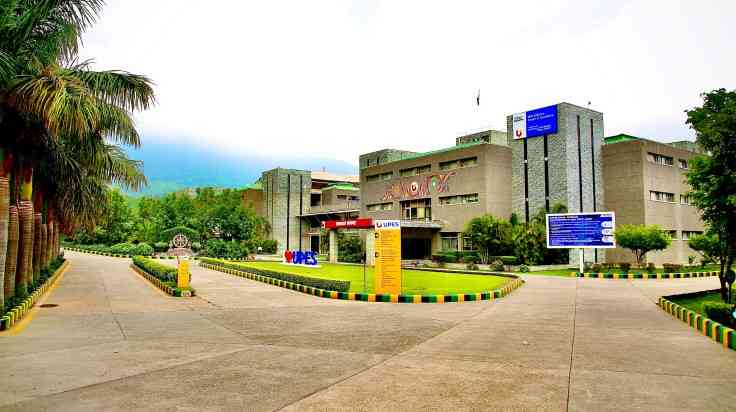
For example, some universities like UPES (Ranked 43rd in NIRF Engineering category) that prioritizes industry-readiness, offer specialized B.Tech and BCA programs in areas such as AI, cybersecurity, and cloud computing. These programs often integrate industry certifications and practical exposure, which can help students transition faster into job roles.
When comparing colleges, focus on:
- Specializations offered
- Industry partnerships
- Internship opportunities
- Placement outcomes
Frequently Asked Questions (FAQs)
1. Which computer course is best after 10th for a quick job?
- The ITI COPA or a Certificate in Digital Marketing/Web Designing are the fastest routes, taking 6 months to 1 year to make you job-ready for entry-level roles.
2. Can I do a computer course if I am from an Arts background?
- Yes! While engineering requires Science/Math, creative fields like UI/UX Design, Animation, and Digital Marketing are open to students from any stream.
3. Is a Diploma better than doing 11th and 12th?
- If you are 100% sure about a career in engineering, a Diploma gives you more practical exposure. However, doing 11th-12th Science keeps more doors open for different types of degrees and competitive exams.
4. What is the average salary after a Computer Diploma?
- Starting salaries for diploma holders typically range from ₹15,000 to ₹30,000 per month. This increases significantly if you pursue a B.Tech through lateral entry.
5. Can I switch from a diploma to a B.Tech degree?
- Yes, this is known as Lateral Entry. You can join the 2nd year of a B.Tech program directly after your 3-year diploma.
Conclusion: The Smart Way to Choose
The tech world is vast, and it’s okay to feel a bit lost. If you enjoy solving problems, go for Diploma in CS or Programming. If you are creative, Graphic Design or Web Design is your path.
Action beats confusion every time. Start with a short-term course or a solid diploma to build your foundation. If you want to aim for the stars, start planning your path toward a specialized degree today.

UPES Editorial Team
Written by the UPES Editorial Team
Tags
- Guest Blogs
UPES Admission Enquiry
Trending Post
-
![]()
Best Private Engineering Colleges in North India 2026: Rankings, Fees & Admissions
08/10/2026By UPES Editorial Team
-
![]()
MBA Colleges in North India 2026: Government, Private, Rankings & Fees
28/09/2026By UPES Editorial Team
-
![]()
Professional Courses After 12th – Full Details for Science, Arts & Commerce
30/09/2025By UPES Editorial Team


Related Articles










Subscribe to UPES Blogs
Join our community for exclusive stories, insights, and updates
By clicking the "Subscribe" button, I agree and accept the privacy policy of UPES.


