Top Degree Courses after 12th in 2026: UG Specializations, Scope, Trends
- UPES Editorial Team
- Published 15/05/2026


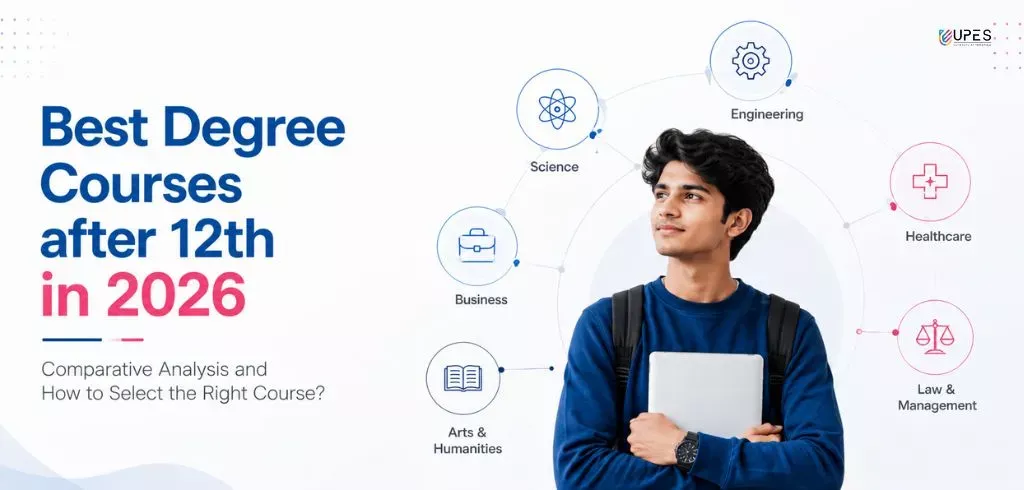
- What are the Most Popular UG Degree Courses after 12th?
- Engineering & Science Degree Courses after 12th
- Arts & Humanities Degree Courses after 12th
- Medical & Health Sciences Degree Courses after 12th
- Business & Management Degree Courses after 12th
- How to Select the Right Degree Program After 12th
- Comparative Analysis of Top Degree Courses after 12th
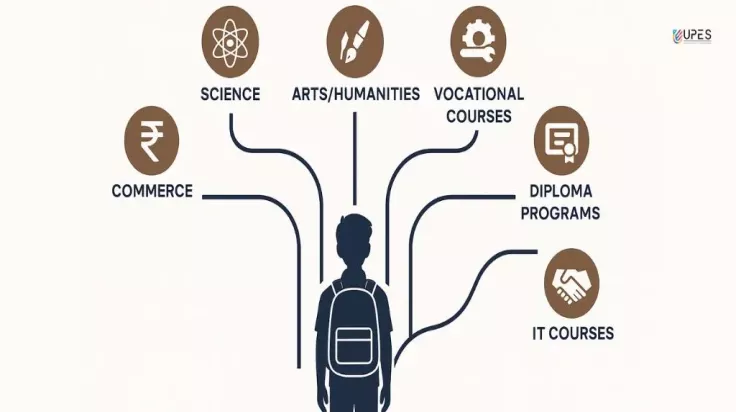
As the admission season begins across UG colleges in India, students completing their schooling and stepping into college life often wonder which career path to choose. Today, there are numerous degree courses after 12th that students can pursue across science, commerce, humanities, management, healthcare, and technology streams.
While traditional engineering branches such as B.Tech Computer Science & Engineering, Civil Engineering, and ECE continue to remain popular, emerging fields like Artificial Intelligence, Machine Learning, and Data Analytics are also attracting significant student interest, resulting in higher applications in recent years. Similarly, students from Biology and Commerce backgrounds often pursue courses such as MBBS, B.Sc Nursing, BBA, and B.Com (Hons.).
With more than 15 lakh students passing their Class 12 examinations as per the 2026 CBSE board results, choosing the right UG course has become more important than ever. To help students make an informed decision, we have provided a comprehensive guide on the top UG degree courses after 12th in India.
What are the Most Popular UG Degree Courses after 12th?
Some degree programs consistently remain popular because of strong placement opportunities, professional growth, and higher education pathways. As per the trends the following are some of the most popular degree programs in India:
- B.Tech/B.E
- B.Sc
- B.Com
- BBA
- BA
- BCA
- LLB
- B.Sc Nursing
Engineering & Science Degree Courses after 12th
Engineering remains the most popular UG degree among 12th passing students. As per the AICTE Data, in 2024-25 academic year,12.53 lakh engineering seats were filled across colleges in India, which was the highest number in the last 8 years, signifying the growing talent pool. Furthermore, science courses such as B.Sc and BCA also offer promising career prospects. The following are some of the popular engineering & science degree courses after completing 12th class:
Course | Duration | Eligibility | Available specialization |
4 years | 10+2 with a minimum of 50-60% marks with |
| |
B.Sc | 3 Years | 10+2 with a minimum 50% marks and PCM as |
|
BCA | 3 Years | 10+2 from a recognized board with a minimum |
|
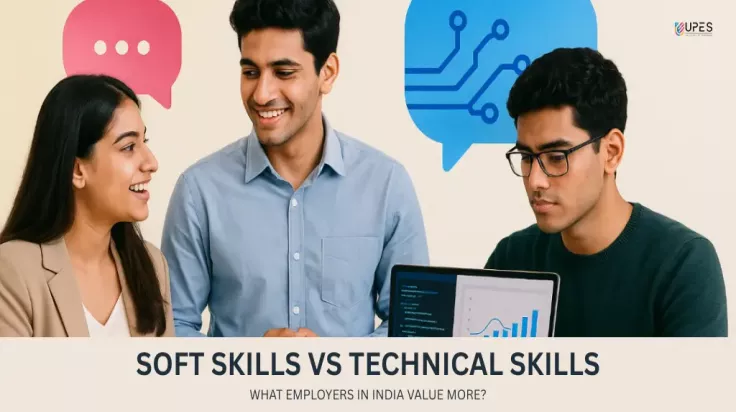
Pro Tip: Recruiters often start with an online assessment to check your technical skills. After you clear that bar, interviewers compare soft skills to judge culture fit, client-readiness, and leadership potential.
Arts & Humanities Degree Courses after 12th
Students who passed their 10+2 with arts and humanities stream often feel confused while selecting their subjects for graduation. However, with correct subject choices and UG degree course, students can enjoy good careers in public services, economics, journalism, and media industries.
The following are some the best Art courses after 12th that students wiht arts & humanities stream can pursue:
Course | Duration | Eligibility | Available specialization |
B.Sc. (Hons.) | 3 Years | 10+2 with a minimum 50% marks and |
|
3 Years | 10+2 from a recognized board with a |
| |
3 Years | 10+2 from a recognized board with a |
|
Medical & Health Sciences Degree Courses after 12th
B.Sc Nursing is becoming one of the fastest-growing healthcare career choices among PCB students after Class 12. As per the data, top Nursing entrance exams such as UP CNET received more than 1.3 lakh registrations, showing growing interest in Biology courses after 12th. Furthermore, courses such as B.Pharm, B.Sc. (Clinical Research), and paramedical courses also receive significant applications:
Course | Duration | Eligibility | Available specialization |
4 Years | 10+2 with Physics and Chemistry as compulsory subjects, | - | |
B.Sc. (Hons.) | 3 Years | 10+2 with a minimum 50% marks and Physics, Chemistry, Biology, or Mathematics subjects |
|
B.Tech | 4 Years | 10+2 with a minimum of 50-60% marks and Physics, Chemistry, Biology, or Mathematics subjects. Students may |
|
B.Sc Nursing | 4 Years | 10+2 (Class 12) from a recognized board with Physics, |
|
Business & Management Degree Courses after 12th
Undergraduate management education in India is steadily expanding with over around 2.32 lakh graduates, mostly having background in commerce studies in their 10+2. Some of the popular Commerce courses after 12th include B.Com in Accounting and Finance and Banking and Insurance.
The following are some of the top courses in business & management stream after 12th:
Course | Duration | Eligibility | Available specialization |
3 Years | 10+2 with a minimum 40-50% marks |
| |
3 Years | 10+2 with a minimum 50-60% marks |
|
How to Select the Right Degree Program After 12th
With a wide variety of undergraduate courses available across science, commerce, arts, management, technology, and creative fields, students often feel confused about which path to choose. The ideal degree program should align with your interests, strengths, career goals, and industry demand. The following are some crucial factors that you must consider before applying for a degree program after 12th:
- Personal interests and strengths: You should always pursue a degree program that interests you. If you are interested in science and technology, you may want to explore programs such as B.Tech, B.E., or BCA. If you are enthusiastic about public policy and humanities, you should consider pursuing courses such as BA in Governance and Public Administration or BA in Philosophy.
- Career goals: You should always choose a degree program that matches your interests and career goals. Whether it is science, technology, humanities, or public policy, selecting a field you are passionate about helps build a strong foundation for your higher education and future career.
- Course curriculum and industry relevance: You should always consider the curriculum such as subjects that are being taught, topics included in the syllabus, and course objectives of the course you are opting for. Furthermore, you should also check whether the course offers industry relevant skills and promising career opportunities.
- Internship and placement opportunities: Check out the past placement records, top roles offered in the course and scope of industry internship opportunities.
- Higher education prospects: If you are looking to pursue higher studies in the same field, check out the kind of courses and their relevance.
Comparative Analysis of Top Degree Courses after 12th
A comprehensive comparison between different UG degree courses will help you understand key differences between top courses and understand their career prospects. Check the table below to know more:
Degree Course | Curriculum Highlights | Approximate Fee Structure (India) | Top Career Opportunities |
B.Tech / B.E. | Engineering fundamentals, coding, AI, Data Science, Robotics, Cybersecurity, practical labs, industry projects |
| Software Engineer, AI Engineer, Data Scientist, Robotics Engineer |
BBA | Business management, marketing, finance, HR, entrepreneurship, business analytics |
| Business Analyst, Marketing Executive, HR Manager, Entrepreneur |
B.Com | Accounting, taxation, finance, economics, banking, business law |
| Accountant, Financial Analyst, Banking Professional, Tax Consultant |
BCA | Programming languages, web development, cloud computing, database management, app development |
| Software Developer, Web Developer, System Administrator, IT Support Specialist |
B.Sc. (Data Science/AI/Biotechnology) | Scientific research, analytics, AI tools, biotechnology, statistics, lab work |
| Data Analyst, Research Associate, Biotech Specialist, Lab Analyst |
BA (Psychology /Media /Liberal Arts) | Communication, psychology, journalism, sociology, public policy, critical thinking |
| Psychologist, Content Strategist, Journalist, Media Planner |
BA LLB | Constitutional law, criminal law, corporate law, legal research, moot courts |
| Lawyer, Legal Advisor, Corporate Counsel, Civil Services |
B.Pharm | Pharmaceutical sciences, drug formulation, pharmacology, healthcare regulations |
| Pharmacist, Drug Inspector, Medical Representative, Clinical Research Associate |
Entrance Exams for UG Degree Courses After 12th
To pursue several UG degree courses, students are often required to qualify for an entrance examination. These examinations can be conducted at national, state, or university levels. The following are some of the important entrance examinations for UG courses after 12th:
Engineering Entrance Examinations
To pursue engineering degree courses in India, students may require appearing in the following engineeeing examinations:
Exam | Level | Conducting Authority |
JEE Main | National | National Testing Agency |
JEE Advance | National | National Testing Agency |
MHT CET | State | Maharashtra State Common Entrance Test Cell |
COMEDK UGET | State | Consortium of Medical Engineering and Dental Colleges of Karnataka |
WB JEE | State | West Bengal Joint Entrance Examinations Board |
OJEE | State | Odisha Joint Entrance Exam Board |
UPES Entrance Exam | University | UPES Dehradun |
BITSAT | University | BITS Pilani |
VITEEE | University | Vellore Institute of Technology |
JET | University | Jain Entrance Test |
Medical UG Entrance Examinations
The following is a list of entrance exams for UG medical courses in India:
Exam | Level | Conducting Body |
NEET-UG | National Level | National Testing Agency |
INI CET | University Level | AIIMS Delhi |
AIAPGET | National Level | National Testing Agency |
AIIMS INI SS | University | AIIMS Delhi |
AIIMS BSc Nursing Exam | University | AIIMS Delhi |
RPVT | State Level | Rajasthan University of Veterinary and Animal Sciences |
Business & Management UG Entrance Examinations
The list highlights business & management UG degree course entrance examinations:
Exam | Level | Conducting Body |
CUET | National | National Testing Agency |
NMAT | National | Graduate Management Admission Council |
OJEE | National | Odisha Joint Entrance Examination Board |
UPES Entrance Exam | University | UPES Dehradun |
Current Market Trends and What Students are Opting in 2026📊
In 2026, student choices are no longer driven only by “popular degrees,” but by employability, skill relevance, and industry demand. Here’s how different degree paths are trending:
Engineering (B.Tech / B.E.)
- Continues to have the highest employability (~71%) among UG courses
- Strong shift toward AI, Data Science, Cybersecurity, and Robotics
- Students are prioritising tech specializations over traditional branches
- Increasing preference for colleges offering industry projects + coding exposure
BBA
- Over 2 lakh+ students graduating annually, showing steady demand
- Students are opting for Analytics, Digital Business, Finance, and Marketing
- Seen as a direct pathway to corporate roles and MBA
- Preferred by students who want early industry exposure and leadership roles
B.Com
- One of the highest-enrolled courses (~43 lakh students) in India
- Popular due to low cost + strong ROI
- Students increasingly combining B.Com with CA, CFA, or FinTech skills
- Strong demand in banking, finance, and accounting roles
BCA
- Demand rising due to AI, automation, and IT industry expansion
- Students choosing BCA as an alternative to B.Tech (more flexible + shorter learning curve)
- Increasing focus on coding, cloud computing, and app development
- Preferred by students targeting software and IT roles early
B.Sc (Data Science / AI / Biotechnology)
- Strong growth in data science, AI, biotech, and research-driven fields
- Students opting for emerging tech + science combinations
- Preferred by those interested in research, analytics, and innovation roles
- Higher fees in private colleges reflect demand for specialized programs
BA (Psychology / Media / Liberal Arts)
- Arts enrollment growing (nearly 40 lakh students)
- Students choosing Psychology, Media, Public Policy, and Liberal Arts
- Rising demand in content, UX research, communication, and social impact roles
- Focus shifting from theory to practical + digital skill integration
BA LLB
- Growth in corporate law, tech law, compliance, and arbitration
- Students exploring careers beyond litigation (corporate/legal consulting)
- Increasing interest due to startup ecosystem and business regulations
B.Pharm
- Around 56% employability with consistent demand
- Growth driven by pharma, clinical research, and healthcare sectors
- Students opting for roles in drug research, pharma companies, and regulation
FAQs
- Which degree course after 12th is future-proof in 2026?
- In 2026, leading degree courses after 12th include B.Tech in AI technology, BBA in Data Science, and BCA. India remains among the leading countries with one of the largest talent pools in AI, IT, and Data Analytics, with over 5.4 million professionals, according to a NASSCOM report. This data highlights the increasing popularity of these degree courses among students. Furthermore, medical courses such as MBBS and B.Sc Nursing have also witnessed a significant rise in applications due to the expanding healthcare sector.
- In 2026, leading degree courses after 12th include B.Tech in AI technology, BBA in Data Science, and BCA. India remains among the leading countries with one of the largest talent pools in AI, IT, and Data Analytics, with over 5.4 million professionals, according to a NASSCOM report. This data highlights the increasing popularity of these degree courses among students. Furthermore, medical courses such as MBBS and B.Sc Nursing have also witnessed a significant rise in applications due to the expanding healthcare sector.
- Can I switch streams after 12th while choosing a degree course?
- Yes, most universities and colleges in India allow students to apply for different courses despite being from a different stream, provided they meet the minimum qualification criteria. However, in some cases, students may need to appear for an entrance exam or complete a bridge course to meet the required qualifications. For example, a student who completed their 10+2 with Biology subjects can pursue technical courses such as B.Tech in Food Technology or Biotechnology. It is recommended that you carefully review the eligibility criteria and minimum requirements before applying for a particular course.
- Yes, most universities and colleges in India allow students to apply for different courses despite being from a different stream, provided they meet the minimum qualification criteria. However, in some cases, students may need to appear for an entrance exam or complete a bridge course to meet the required qualifications. For example, a student who completed their 10+2 with Biology subjects can pursue technical courses such as B.Tech in Food Technology or Biotechnology. It is recommended that you carefully review the eligibility criteria and minimum requirements before applying for a particular course.
- How important is college selection compared to the course itself?
- While the course curriculum and status of the degree largely remain the same, it is the college, faculty, and learning environment that truly define your educational experience. Therefore, you should give equal importance to college selection along with course selection. A college’s overall reputation and resources can significantly influence your employability and networking opportunities.
- While the course curriculum and status of the degree largely remain the same, it is the college, faculty, and learning environment that truly define your educational experience. Therefore, you should give equal importance to college selection along with course selection. A college’s overall reputation and resources can significantly influence your employability and networking opportunities.
- What mistakes should I avoid while choosing a degree course after 12th?
- Choose what interests you the most: Instead of following the crowd and applying for the most popular course, take time to understand your interests, strengths, and aspirations before making a decision.
- Research career scope: Make sure to explore the future scope, industry demand, and potential career opportunities associated with a particular course.
- Research campus and placement records: Before applying to a college or university, review its past placement performance, infrastructure, faculty background, industry exposure, and overall reputation.
Why Choosing the Right UG Degree Course Matters?
Choosing the right undergraduate degree course after Class 12 is important because it lays out the foundation for your future career, higher education, and professional growth. The degree you select influences the knowledge, technical skills, and practical experience you gain during your college years.
In 2026, industries are rapidly evolving due to advancements in technology, artificial intelligence, digital business, healthcare, and creative sectors. As a result, students need to choose courses that align with both their interests and future industry demands. Selecting the right UG program can improve career opportunities, job satisfaction, and long-term growth prospects.

UPES Editorial Team
Written by the UPES Editorial Team
Tags
- Guest Blogs
UPES Admission Enquiry
Trending Post
-
![]()
Best Law Colleges in North India 2026: Government, Private, Rankings & Fees
15/10/2026By UPES Editorial Team
-
![]()
Best Private Engineering Colleges in North India 2026: Rankings, Fees & Admissions
08/10/2026By UPES Editorial Team
-
![]()
MBA Colleges in North India 2026: Government, Private, Rankings & Fees
28/09/2026By UPES Editorial Team


Related Articles















Subscribe to UPES Blogs
Join our community for exclusive stories, insights, and updates
By clicking the "Subscribe" button, I agree and accept the privacy policy of UPES.


