PhD After MBA: Eligibility, Program Structure, Benefits, Career Opportunities
- UPES Editorial Team
- Published 01/05/2026



A PhD after MBA can be a powerful move but only when the “why” is sharp. If you are considering doctoral study because you enjoy research, want to teach, want credibility in a niche (strategy, finance, HR, analytics), or want to build a long-term career in academia or research-led leadership, it can pay off. If you are using a PhD as a pause button because you are unsure about jobs, it often becomes an expensive detour in time and opportunity cost.
This guide breaks down eligibility, duration, fees, structure, and realistic outcomes so you can decide with clarity.
Become future-ready with our Business programs
Know MoreWhat is a PhD after MBA?
A PhD after MBA is a research-intensive doctoral degree that allows management graduates to specialize deeply in a business vertical (like Fintech, Organizational Behavior, or Supply Chain). Unlike the application-heavy MBA, the PhD focuses on creating new knowledge through original research, data modeling, and academic defense.
Can an MBA graduate apply for a PhD?
The short answer is a resounding yes. In fact, an MBA is one of the most common precursors to a PhD in Management or Business Administration. Most Indian universities and international business schools recognize the 2-year MBA as the qualifying Master's degree required for doctoral entry.
While an MBA provides a broad horizontal view of how businesses function, the PhD allows you to drill vertically into a specific problem. For instance, while an MBA teaches you how to manage a team, a PhD in Organizational Behavior allows you to research how remote-work hybrid models affect long-term cognitive productivity.
Core Eligibility Criteria in India
To secure a seat in a reputable doctoral program, you typically need:
- Academic Record: A Master’s degree (MBA/PGDM) with a minimum of 55% aggregate marks (50% for reserved categories).
- Entrance Exams: Valid scores in UGC-NET, JRF, GATE, or university-specific entrance tests.
- Research Proposal: A preliminary document outlining your intended area of study and its relevance to current industry gaps.
Do I need UGC NET for PhD after MBA?
Many universities use NET as a route or exemption, and UGC-aligned processes often incorporate NET categories and interview weightage. Some universities also run their own entrance tests with interviews.
PhD after MBA: a quick decision tool before you apply
Use this as a quick filter: if you say “yes” to at least three points, a PhD makes sense.
- You should be able to name a specific research problem you’d genuinely study for 3–5 years, enjoy reading papers and building evidence-based arguments, and want a career where research credibility matters (academia, think tanks, corporate research, policy, specialist consulting).
- You’re also okay with slower financial payoff and long academic processes like entrance tests/NET rules, proposal reviews, and revisions.
- A PhD is probably not the right move yet if your main goal is a faster salary jump, you don’t know what you want to research and expect the program to decide it for you, you dislike writing and ambiguity, or you can’t commit steady time every week for years.
How to apply for PhD after MBA (step-by-step, India-focused)
Here’s the clean sequence that reduces wasted applications:
- Choose a research direction (not just a subject): define a problem statement + why it matters.
- Shortlist universities by fit, not just brand: faculty research alignment, research culture, and whether your topic is supported.
- Check the admission route: RET/entrance test, NET exemptions, interview requirements, research proposal format.
- Prepare a 1–2 page research concept note (problem, gap, method, data access).
- Apply + entrance/NET route + interview. Some universities explicitly require a research proposal submission during the process.
- After selection: coursework registration, supervisor allocation, proposal defence timeline.
Program structure: what the PhD years look like after MBA
PhD isn’t “classes for 5 years.” Most programs follow a research pipeline:
Year 1: coursework + research foundation
- Research methodology, literature review techniques, research ethics, subject seminars
- Building a literature map and refining your research question
Many university rules align the PhD minimum duration to 3 years including coursework, and a maximum of 6 years.
Year 2: proposal defence + data plan
- Proposal presentation/defence
- Finalizing methods: qualitative/quantitative/mixed methods
- Data collection plan (datasets, interviews, fieldwork, experiments)
Years 3–5: execution + publications + thesis writing
- Analysis, paper writing, conference submissions
- Thesis drafting, feedback loops, revisions
Final stage: thesis submission + viva
- Pre-submission checks, plagiarism compliance
- External evaluation + viva voce
PhD after MBA subjects: What you can research (and what employers respect)
Instead of thinking “PhD in MBA subjects,” think “PhD in management research areas.” Common tracks include:
- Strategy and competitiveness (platforms, internationalization, industry evolution)
- Marketing (consumer behavior, digital marketing, brand strategy, pricing)\
- Finance (risk, corporate finance, behavioral finance, fintech)
- HR/OB (leadership, culture, motivation, DEI, employee experience)
- Operations and supply chain (resilience, forecasting, optimization)
- Entrepreneurship (startup scaling, funding, ecosystems)
- Business analytics and decision science (models, causal inference, experimentation)
- Sustainability/ESG and policy-linked management research
Which PhD course is best after MBA?
The "best" PhD courses is one that complements your MBA specialization.
- MBA Finance → PhD in Fintech or Macroeconomics.
- MBA HR → PhD in Organizational Psychology or Diversity & Inclusion.
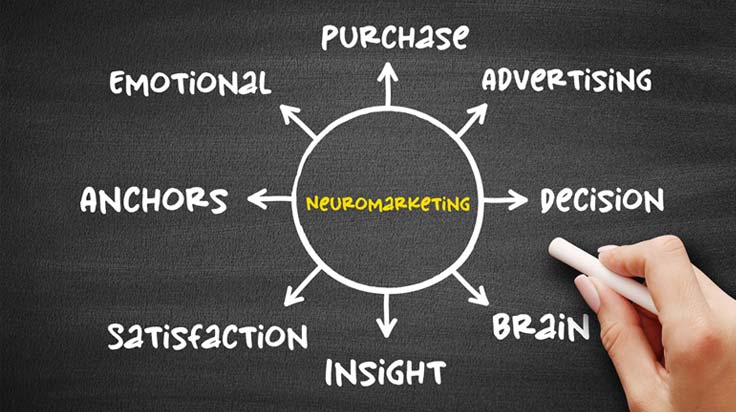
- MBA Marketing → PhD in Digital Consumerism or Neuromarketing.
With a professional ecosystem that has facilitated a highest placement package of INR 30 LPA and fostered over 240 successful startup stories, institutions like UPES ensure that your doctoral journey is backed by a network of 270+ top-tier firms like Amazon and Deloitte. This transforms a student from a researcher into an industry-ready leader equipped to solve complex business challenges.
PhD after MBA duration and fees (plus funding reality)
Duration: how many years is a PhD after MBA?
- For many Indian universities following UGC-aligned rules, PhD duration is typically 3 to 6 years (including coursework), with extensions governed by institutional policy.
Fees: what you should budget
- PhD fees vary widely by university type, mode, and whether there is a waiver/stipend. UPES School of Business PhD publishes clear fee details:
- Part-time PhD: ₹1,00,000 per semester
- Full-time PhD: 75% waiver on semester fee, with ₹25,000 per semester after waiver, and a ₹30,000/month stipend payable to selected full-time scholars (upes)
| Mode | Typical duration | Typical cost pattern | Funding reality | Best for |
| Full-time PhD | 3–6 years | Lower fee in some universities; can include waivers | Possible stipend (university/fellowship) | Academia + research-first careers |
| Part-time PhD | Often longer (varies by rules) | Higher effective cost due to longer time + per-sem fees | Rare stipends; you usually self-fund | Working professionals building research depth |
If you want a clear reference point for fee and funding structure, UPES has published details for its PhD in Business Administration (full-time/part-time, waiver and stipend), which makes comparison easier while shortlisting.
Is full-time PhD better than part-time after MBA?
Full-time is better if you want an academic/research-first career and can access funding/stipend. Part-time can work if you’re already employed and want research depth without leaving your job, but it usually takes longer.
PhD after MBA salary: what changes (and what doesn’t)
A PhD doesn’t guarantee a high salary by itself. It changes the roles you can credibly compete for.
Track 1: Academia (Assistant Professor → Associate Professor → Professor)
- In UGC-scale institutions, entry-level basic pay often starts around ₹57,700/month at Academic Level 10 (allowances vary by location and policy).
- In many private PhD colleges, especially contract roles, pay can be lower than UGC norms (news reporting highlights this gap).
Track 2: Research roles (corporate research, think tanks, policy research)
- Pay ranges vary massively based on domain (finance/analytics tends to pay more) and whether you’re building applied research products.
Track 3: Consulting / Strategy roles (research-heavy niches)
- Some graduates leverage PhD credentials for specialist consulting or analytics-heavy strategy work. Estimates published by universities often show higher ranges than pure academia, but treat these as directional and dependent on skill + portfolio.
Common mistakes that waste 1–2 years (and how to avoid them)
Mistake 1: Picking a topic that’s too broad
Fix: Narrow to a researchable question with clear variables, context, and feasible data access.
Mistake 2: Applying without checking supervisor alignment
Fix: Shortlist universities by faculty research match and recent publications, not brochure promises.
Mistake 3: Underestimating the writing load
Fix: Build a weekly writing habit before you even apply: literature notes, summaries, mini research briefs.
Mistake 4: Treating “PhD = professor job” as automatic
Fix: Plan for publishing, teaching experience, and conference activity—these are your academic currency.
Where UPES fits?
If you’re shortlisting options, UPES School of Business is listed at Rank 36 in India (Management) in NIRF 2025.
For students who care about industry relevance alongside academics, UPES positions its ecosystem around industry-facing outcomes. UPES leads with placements at 270+ firms (including names like Amazon, Deloitte, Accenture), highest package around ₹30 LPA, and 240+ startup stories with ₹110+ crore funding.
For the PhD check UPES program-level eligibility and fee/stipend structure clearly, to help you compare options transparently.

Our counsellors are just a click away.
Conclusion
PhD requires focus and patience. If you are interested in pursuing a PhD, you can always begin with a search for "Current Trends in [Your MBA Specialization] 2025-2026" on Google scholar. Read them to see if the academic tone excites you.
If you’re actively planning a doctoral application, review the UPES PhD in Business Administration page to align eligibility, fee mode (full-time/part-time), and funding structure with your career intent. Apply Today!

UPES Editorial Team
Written by the UPES Editorial Team
UPES Admission Enquiry
Trending Post
-

-

Business Intelligence vs Data Analytics: Differences, Careers, Skills & Salary
05/10/2026By UPES Editorial Team
-


Related Articles



















































Subscribe to UPES Blogs
Join our community for exclusive stories, insights, and updates
By clicking the "Subscribe" button, I agree and accept the privacy policy of UPES.


