Immersive Tech vs Computer Science: Key Differences & What Should You Choose?
- UPES Editorial Team
- Published 08/07/2026


- What is Immersive Technology?
- What is Computer Science
- Immersive Technology vs Computer Science which is Better
- Top Industries for Immersive Technology Jobs
- Immersive Technology vs Computer Science: Future Scope
- Can Immersive Technology and Computer Science Work Together?
- Immersive Technology vs Computer Science: Which One Should You Choose
As a student, selecting the right course for higher education can be confusing. With continuous advancements in the tech industry, students no longer have limited career options within the IT sector. The emergence of Immersive Technology and ongoing innovations in Computer Science now allow students to explore diverse career paths.
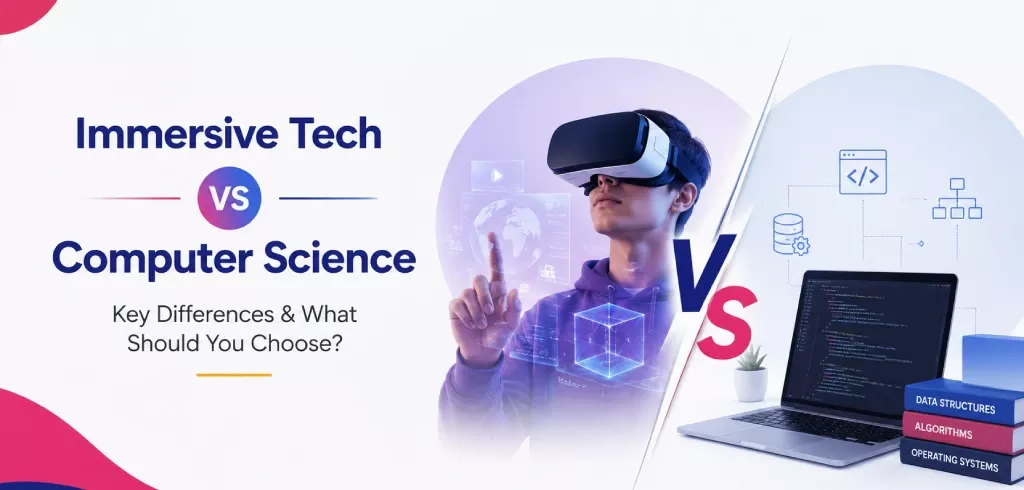
It can be difficult to determine which is better between computer science vs immersive technology, particularly as both disciplines are closely related to innovation, technology, and future professions. Immersive technology uses techniques like Augmented Reality (AR), Virtual Reality (VR), and Mixed Reality (MR) to create interactive digital experiences, whereas Computer Science concentrates on the fundamentals of computing, programming, and software systems.
Here is a thorough immersive technology vs computer science comparison to help you decide which path best suits your interests and professional objectives.
Become future-ready with our Computer Science programs
Know MoreWhat is Immersive Technology?
Immersive Technology refers to technologies that converge virtual realities with the physical world to create simulated and interactive environments. There are several components of Immersive Technologies, such as Virtual Reality (VR), Augmented Reality (AR), Mixed Reality (MR), Extended Reality (XR), and Spatial Computing.
If you are wondering what are immersive technologies used for, their applications span across multiple industries including robotics, animation, healthcare, retail, education, gaming, and digital marketing. Immersive Technology allows users to interact with virtual and physical objects in real time, creating more engaging and realistic experiences. By utilizing immersive technology models, organizations can offer efficient training programs, improve customer engagement, enhance product visualization, and implement cost-effective sales and marketing practices.
Subjects You'll Study
| Immersive Technology |
| AR Development |
| VR Development |
| Unity |
| Unreal Engine |
| Human Computer Interaction |
| Spatial Computing |
| Digital Twins |
| XR Design, 3D Modelling |
Skills Learned in Immersive Technology Course:
The following are some of the key skills that one learns from an Immersive Technology curriculum:
- AR/VR development
- 3D design and modeling
- Game engines like Unity and Unreal Engine
- User Experience (UX) design
- Animation and interactive media
- Spatial computing
- Creative problem-solving
What is Computer Science
Computer science is the study of computers, programming languages, computer systems, algorithms, and software development. Computer Science studies form the foundation of the modern IT and software industry. Furthermore, computer science concepts are also utilized in the development of several Immersive Tech models. Students graduating with a Computer Science degree often pursue roles as software developers, web developers, computer engineers, AI tools engineers, etc.
Subjects You'll Study:
| Computer Science |
| Programming |
| Algorithms |
| OS |
| Database |
| AI, Machine Learning |
| Cybersecurity |
| Cloud |
| Networks |
Skills Learned in Computer Science Course:
Students pursuing Computer Science education often learn the following skills:
- Programming
- Data structures and algorithms
- Software engineering
- Databases
- Artificial Intelligence (AI)
- Cybersecurity
- Cloud computing
- Operating systems
Immersive Technology vs Computer Science which is Better
While immersive technology and computer science are distinct domains, many immersive technology concepts are built upon core computer science fundamentals such as programming, graphics, and human-computer interaction. However, with rapid technological advancements, immersive technology has evolved into a more interdisciplinary field that combines computing with design, user experience, and interactive media. The table below compares the two domains in detail:
Aspect | Immersive Technology | Computer Science |
Core Focus | Interactive digital experiences | Computing systems and software |
Learning Style | Creative and technical | Highly technical and analytical |
Main Technologies | AR, VR, MR, XR | Programming, AI, software systems |
Tools Used | Unity, Unreal Engine, Blender | Python, Java, C++, SQL |
Industry Applications | Gaming, simulation, media, design | IT, software, AI, fintech, cybersecurity |
Coding Requirement | Moderate | High |
Career Orientation | Experience design and immersive products | Software and systems engineering |
Best Suited For | Creative technologists | Analytical problem-solvers |
Career Prospects in Immersive Technology
Immersive Technology is an actively evolving modern technology, and therefore, career opportunities in this field are endless with analytical roles and good salaries. The following are some of the top jobs available for students pursuing Immersive Technology education:
Role | Average Salary (LPA) |
AR/VR Developer | ₹16 to ₹18 LPA |
XR Designer | ₹7 to ₹9 LPA |
Game Designer | ₹17 LPA to ₹20 LPA |
3D Artist | ₹9 LPA to ₹12 LPA |
Metaverse Experience Designer | ₹20 LPA to ₹23 LPA |
Simulation Developer | ₹15 LPA to ₹18 LPA |
Interactive Media Specialist | ₹18 LPA to ₹22 LPA |
Virtual Production Artist | ₹5.5 LPA to ₹9.5 LPA |
| Source: Naukri, Indeed, Ambitionbox | |
Top Industries for Immersive Technology Jobs
Applications of Immersive Technology spans across diverse industries, the following are some of the key industries that offer opportunities:
- Gaming and entertainment
- Healthcare simulation
- Retail and e-commerce
- Architecture and real estate
- Education technology
- Automotive and manufacturing
Career Prospects in Computer Science
Being one of the core streams for the IT industry, demand for Computer Science roles is always high in the job market. Therefore, students pursuing Computer Science education get plenty of career opportunities in software development, data processing, OS development, and more. The following are some of the top computer science jobs:
Role | Average Salary |
Software Developer | ₹15 LPA to ₹16 LPA |
Data Scientist | ₹8 LPA to ₹15 LPA |
AI Engineer | ₹20 LPA to ₹22 LPA |
Cybersecurity Analyst | ₹24 LPA to ₹26 LPA |
Cloud Engineer | ₹15 LPA to ₹25 LPA |
Full-Stack Developer | ₹6 LPA to ₹10 LPA |
Machine Learning Engineer | ₹24 LPA to ₹30 LPA |
Systems Architect | ₹7 LPA to ₹11 LPA |
| Source: Naukri, Indeed, Ambitionbox | |
Top Industries for Computer Science Jobs
Check the list below to find out leading industries offering opportunities to Computer Science graduates:
- IT and software
- Banking and fintech
- Healthcare technology
- E-commerce
- Telecommunications
- Government and defense
- Startups and global tech companies
Immersive Technology vs Computer Science: Future Scope
While the career prospects and future scope are strong in both Immersive Technology and Computer Science, choosing one for your career should depend on your personal ambitions and long-term goals. Let’s break down the future scope and explore why you should choose either field through the following points:
Choose a Career in Immersive Technology If:
- You enjoy creativity and technology equally
- You are interested in gaming, AR/VR, or digital experiences
- You like visual storytelling and interactive design
- You want to work in emerging tech industries
- You prefer project-based and experiential learning
Choose a Career in Computer Science if:
- You enjoy coding and logical problem-solving
- You are interested in software engineering or AI
- You prefer analytical and technical subjects
- You want broader career flexibility
- You are comfortable with mathematics and algorithms
Can Immersive Technology and Computer Science Work Together?
Yes, as mentioned earlier, several Immersive Technologies fundamentals are offshoots of Computer Science concepts, and there are several use cases of both technologies converging to produce interactive models. Some of the examples include:
- AR/VR applications require programming and graphics computing
- Game engines rely on software engineering principles
- AI is being integrated into immersive environments
- Spatial computing combines design, interaction, and coding
Therefore, students who possess interdisciplinary skills often find themselves in advantage and have much better career prospects than those who only have one specialization skill.
Immersive Technology vs Computer Science: Which One Should You Choose
There is no universally “better” option between Immersive Technology and Computer Science. The ideal choice depends on the kind of work you enjoy and the career path you envision.
- If you are passionate about coding, software systems, AI, and technical problem-solving, Computer Science may be the right fit.
- If you are excited by AR/VR, gaming, digital experiences, creativity, and interactive environments, Immersive Technology could be a more rewarding path.
As industries increasingly move toward experiential digital ecosystems, both domains are expected to evolve rapidly and even overlap in the future. The best approach is to choose a field that aligns with your strengths, curiosity, and long-term goals.

Our counsellors are just a click away.
Conclusion
The future of immersive technology is inseparable from computer science.

UPES Editorial Team
Written by the UPES Editorial Team
UPES Admission Enquiry
Trending Post
-

Full Stack Developer Interview Questions- Freshers to Experienced & High Level
08/08/2025By UPES Editorial Team
-

Gender Digital Divide: Challenges in Undergraduate Computer Science Programs
29/09/2025By Dr. Avita Katal
-

How to Create a Web Developer Portfolio & Why is it important (Examples, Templates, Ideas, Content & Website)
11/02/2025By UPES Editorial Team


Related Articles



































Subscribe to UPES Blogs
Join our community for exclusive stories, insights, and updates
By clicking the "Subscribe" button, I agree and accept the privacy policy of UPES.


