Electrical Engineering Interview Questions: Basic, Advanced, Skill-based
- UPES Editorial Team
- Published 11/03/2026


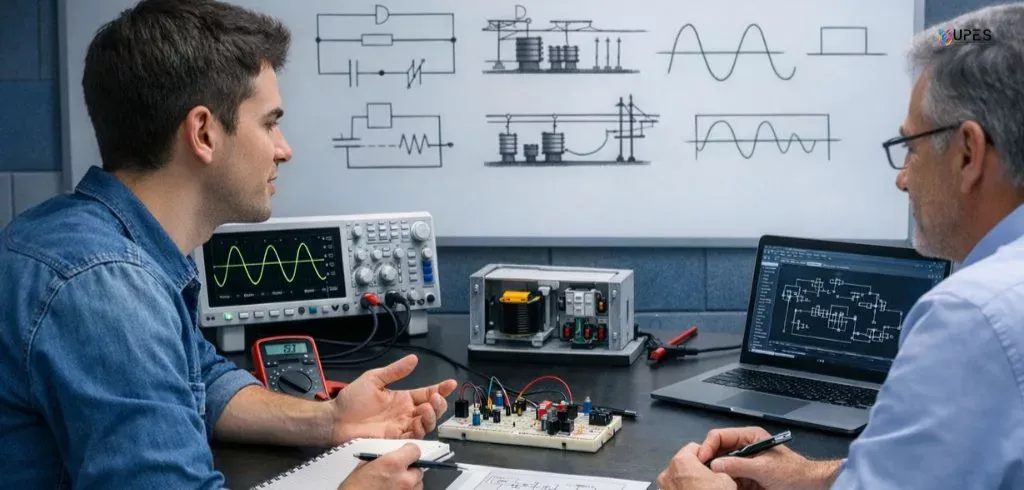
- How interviewers evaluate Electrical Engineers
- Basic electrical engineering interview questions
- Electrical engineering interview questions for Freshers
- Interview questions for Electrical Engineer Professionals
- Electrical Engineering Technical interview questions
- Role + Skills Mapping (What to prepare for your target job)
If you’re searching electrical engineering interview questions, you probably want one thing: clarity on what gets asked and how to answer confidently.
Whether you’re a fresher, a young professional, or a parent helping someone prepare, interviews test real understanding and application, not just textbook definitions.
This blog gives you a structured set of electrical engineering interview questions across basics, fresher rounds, role-based questions, and technical interviews, along with answer frameworks and quick revision checklists so you can prep smarter, faster, and with less stress.
Become future-ready with our Advanced Engineering programs
Know MoreHow interviewers evaluate Electrical Engineers
Choosing a career in engineering requires not only an understanding of one’s interests but also a close evaluation of each discipline’s long-term prospects. Among the most sought-after engineering domains, Electrical Engineering and Mechanical Engineering stand out for their foundational importance and wide industrial applications. As an electrical engineer, interviewers usually score you on:
- Concept clarity (Ohm’s law to power systems)
- Problem-solving (can you reason from symptoms to root cause?)
- Safety + standards mindset (earthing, protection, isolation)
- Practical exposure (labs, instruments, wiring, simulations)
- Communication (can you explain your design choices simply?)
Basic electrical engineering interview questions
These are common in the first round and are often used to filter quickly.
1) What is the difference between AC and DC?
- What they assess: Fundamentals + application understanding
- How to answer: Define + give real examples (battery vs grid)
- Sample answer: DC flows in one direction with constant polarity (like batteries, PV). AC changes direction periodically (like household supply), which makes it easier to step up/down using transformers for efficient transmission.
2) State Ohm’s Law. When does it not apply?
- What they assess: Concept + limitations
- Sample answer: Ohm’s law: (V = IR). It doesn’t hold for non-ohmic devices like diodes, transistors, filament lamps at varying temperature, or any component where resistance changes with voltage/current.
3) What is power factor? Why is it important?
- What they assess: Power fundamentals + industry relevance
- Sample answer: Power factor is the ratio of real power (kW) to apparent power (kVA). Low PF increases current, causes higher losses, voltage drops, and can attract penalties in industrial billing. PF correction improves efficiency.
4) Explain the difference between earthing and grounding.
- What they assess: Safety clarity
- Sample answer: Earthing connects exposed metal parts to earth for shock protection. Grounding connects the system neutral/reference point to earth to stabilize voltages and enable fault current paths.
5) What is a transformer and why is it rated in kVA, not kW?
- What they assess: Practical understanding
- Sample answer: Transformer transfers power via electromagnetic induction. It’s rated in kVA because heating depends on voltage and current (core + copper losses), not on load power factor.
6) What is the difference between MCB and MCCB?
- What they assess: Protection basics
- Sample answer: MCB is used for lower current ratings (typically residential/light commercial), while MCCB supports higher currents with adjustable trip settings for industrial applications.
7) What is a short circuit? What happens during it?
- What they assess: Fault concept + safety
- Sample answer: A short circuit is an unintended low-resistance path causing very high current. It can lead to overheating, insulation damage, fire risk, and equipment failure—so protective devices must interrupt quickly.
8) What is a 3-phase system and why is it preferred?
- What they assess: Core power systems
- Sample answer: 3-phase uses three sinusoidal voltages 120° apart. It delivers smoother power, better efficiency, and enables simpler, more robust motor operation compared to single-phase.
Mini checklist for basics (what to revise):
- Ohm’s law, KCL/KVL, power, energy units
- AC fundamentals, RMS, impedance
- Transformers, motors, generators (high-level)
- Protection devices + earthing
Electrical engineering interview questions for Freshers
Freshers are typically tested on fundamentals + projects + attitude. Expect questions that connect theory to what you did in labs, internships, or final-year projects.
1) Tell me about your final-year project. What was your role?
- What they assess: Ownership, clarity, teamwork
- How to answer: Use a 4-part structure: Problem → Your contribution → Tools → Result
- Sample answer (template): “Our project solved ____. I handled __ (design/simulation/testing), used ____ (MATLAB/Simulink/ETAP/Proteus), and we achieved ____ (efficiency, accuracy, cost reduction). If I redo it, I’d improve ____.”
2) Which subjects are you strongest in—and why?
- What they assess: Self-awareness + depth
- Sample answer: “I’m strongest in power systems and machines because I’ve worked on relay/protection experiments and motor control labs. I can explain concepts and also interpret practical symptoms like overheating, PF issues, and voltage drops.”
3) How do you troubleshoot a circuit that isn’t working?
- What they assess: Debug thinking
- Sample answer: “I start with safety. Then check supply and continuity, confirm component ratings, verify connections vs schematic, measure key nodes using a multimeter, and isolate sections to find where expected values deviate.”
4) What instruments have you used in labs?
- What they assess: Hands-on exposure
- Good answer includes: multimeter, CRO/DSO, clamp meter, megger, power analyzer, function generator (as applicable)
5) Difference between star and delta connection?
- What they assess: 3-phase basics
- Sample answer: Star provides a neutral point and higher phase voltage relation; delta handles higher currents and is common in motor running. Starting methods often use star-delta to reduce inrush current.
6) What is inrush current? Why is it a problem?
- What they assess: Practical power insight
- Sample answer: Motors draw high current at start due to low back EMF, which can cause voltage dips, overheating, and nuisance tripping. Star-delta starters, soft starters, and VFDs help reduce it.
7) What is an ideal vs practical diode?
- What they assess: Basics of electronics
- Sample answer: Ideal diode has zero forward drop and infinite reverse resistance. Practical diode has ~0.7V (silicon) forward drop and small reverse leakage.
8) Why do you want this role/company (as an electrical engineer)?
- What they assess: Motivation + realism
- Sample answer: “I want a role where I can build core electrical skills—design, protection, commissioning, and troubleshooting—while learning standards and safety practices. I’m looking for structured training and real exposure to projects.”
Fresher prep tip:
Create a one-page “project sheet” with: objective, block diagram, components, ratings, test results, failures faced, and what you learned. That single sheet can carry your entire interview.
Interview questions for Electrical Engineer Professionals
This section targets role-based interviews: plant, construction, maintenance, design, testing, automation, renewable energy, EV, and utility roles.
1) How do you ensure electrical safety at a site?
- What they assess: Safety mindset
- Strong points to mention: LOTO, PPE, isolation, earthing checks, signage, permit-to-work, test-before-touch
- Sample answer: “I follow LOTO, isolate the source, verify zero voltage, ensure proper earthing, and use correct PPE. I don’t rely on assumptions—measurement and procedure come first.”
2) What is your approach to Preventive Maintenance?
- What they assess: Reliability thinking
- Sample answer: “I use a checklist-based schedule—visual inspection, tightening, insulation testing, thermal scanning, current imbalance checks, lubrication where applicable, and record trends to catch degradation early.”
3) How do you select a cable for an application?
- What they assess: Engineering judgment
- Include: load current, voltage drop, installation method, ambient temp, derating, fault current, insulation type
- Sample answer: “I calculate current, check permissible voltage drop, apply derating factors, verify short-circuit rating, then pick insulation and installation type suitable for environment and standards.”
4) Explain the difference between Relay Types (OCR, EFR, Differential).
- What they assess: Protection awareness
- Sample answer: Overcurrent relays operate when current exceeds threshold, earth fault relays respond to leakage/ground faults, and differential protection compares input/output currents (common in transformers).
5) How do you handle repeated Tripping of an MCB/Relay?
- What they assess: Troubleshooting logic
- Sample approach: confirm rating → inspect load → check insulation → check earth leakage → isolate sections → identify pattern (time-based vs load-based)
6) What is SCADA/PLC and where have you used it?
- What they assess: Automation exposure
- Sample answer: “SCADA monitors and controls processes remotely; PLC executes control logic. I’ve used PLC basics in labs/projects like motor start-stop sequences and sensor-based control.”
7) What standards/codes are you familiar with?
- What they assess: Professional readiness
- Mention what you genuinely know: IEC/IS basics, safety practices, wiring color codes, testing protocols (don’t bluff).
8) Describe a time you solved a real technical issue.
- What they assess: Ownership + results
- Use STAR: Situation → Task → Action → Result (keep it 60–90 seconds).
Electrical Engineering Technical interview questions
These go deeper into power systems, machines, protection, control, power electronics, and measurements. Even if you’re a fresher, you may face 3–5 of these in a technical round.
Power Systems & Protection
1) What is per-unit system and why is it used?
- What they assess: Power system modeling
- Sample answer: Per-unit normalizes values based on base MVA and base kV. It simplifies calculations across different voltage levels and makes impedance comparisons easier.
2) Explain corona effect in transmission lines.
- What they assess: Transmission basics
- Sample answer: Corona is ionization around conductors at high voltages causing power loss, noise, and insulation stress. It’s reduced by larger conductor diameter and bundle conductors.
3) What is the difference between fuse and circuit breaker?
- What they assess: Protection comparison
- Sample answer: Fuse is a one-time device that melts under overcurrent. Circuit breaker can trip and be reset, and often provides better coordination and protection settings.
Electrical Machines
4) Why is the starting current high in induction motors?
- What they assess: Machines concept
- Sample answer: At start, slip is 1 and back EMF is low, so rotor current is high—leading to high stator current. Star-delta, autotransformers, soft starters, and VFDs reduce it.
5) What is slip? How does it relate to torque?
- What they assess: Depth in induction motor theory
- Sample answer: Slip is ((Ns - Nr)/Ns). Torque depends on slip; maximum torque occurs at a certain slip based on rotor resistance and reactance.
Control Systems
6) What is PID control? Where is it used?
- What they assess: Control fundamentals
- Sample answer: PID uses proportional, integral, and derivative actions to reduce error and stabilize system response. It’s used in motor speed control, temperature control, and industrial process control.
Power Electronics
7) Difference between MOSFET and IGBT.
- What they assess: Switching device selection
- Sample answer: MOSFETs are faster and common at lower voltages/higher frequencies. IGBTs handle higher voltages/currents with slower switching—common in inverters and motor drives.
8) What is PWM and why is it used?
- What they assess: Practical inverter knowledge
- Sample answer: PWM controls effective output voltage by varying duty cycle, improving efficiency and enabling smooth control in motor drives and power converters.
Measurement & testing
9) What is insulation resistance? How do you measure it?
- What they assess: Safety + testing
- Sample answer: Insulation resistance indicates insulation health, measured using a megger by applying DC voltage and observing resistance. Low IR suggests moisture/aging/insulation breakdown.
10) What is the difference between CT and PT?
- What they assess: Instrument transformer basics
- Sample answer: CT steps down current for measurement/protection; PT steps down voltage. Both isolate instruments and relays from high-voltage systems.
Role + Skills Mapping (What to prepare for your target job)
Based on the role you are targeting, accordingly specific skills can be developed. Here’s a table clearly listing concepts you can be questioned on in the interviews, and how can you make sure you exhibit the desired knowledge.
| Target Role | Most Asked Areas | Tools that Help |
| Power/utility engineer | protection, transformers, switchgear, transmission | ETAP basics, relay logic, single-line diagrams |
| Maintenance engineer | troubleshooting, safety, motors, panels | multimeter, megger, thermal scanning basics |
| Design engineer | cable sizing, load estimation, drawings | AutoCAD electrical, standards awareness |
| Automation engineer | PLC/SCADA, sensors, control logic | ladder logic basics, industrial communication |
| Renewable/EV-focused | power electronics, batteries, drives | inverter concepts, BMS basics, MATLAB/Simulink |
Salary, Scope, and Career outlook in India
Electrical engineering salaries vary widely by role, industry, location, and skills. As a reference point, Indeed reports an average electrical engineer salary in India around ₹22,992 per month (based on thousands of reported salaries).
- For entry-level roles, salary aggregators report figures around the ₹4–5 LPA range, though numbers differ by dataset size and role definition. (Sources: Indeed, Glassdoor)
In-demand tracks right now (and why interviews focus on them):
- Smart grids + protection (reliability + automation needs)
- EV + industrial drives (motor control + power electronics)
- Renewables + energy markets (integration + grid stability topics show up)
- Electrical Engineering and Electronics Engineering may sound similar, but they lead to different roles and growth paths based on your specialisation and industry demand.
- In India, salaries are broadly comparable, with Electronics often slightly higher at senior levels: entry-level is around ₹3–6 LPA (Electrical) vs ₹3–7 LPA (Electronics), rising to roughly ₹15–30+ LPA vs ₹18–35+ LPA after 10+ years, depending on location, company, and skills.
Where a strong B.Tech program can change your interview outcomes
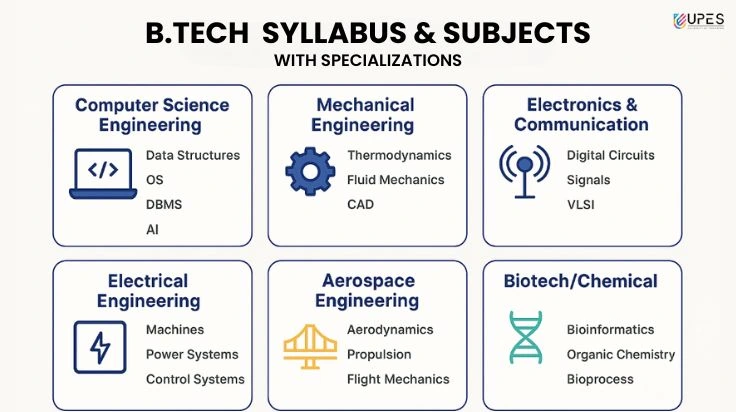
If you’re serious about cracking interviews, your advantage comes from practical exposure—not just notes. If you’re exploring undergraduate options, it’s worth reviewing the UPES B.Tech Electrical Engineering curriculum and specialisations to see how closely it matches the roles you’re targeting.
UPES is ranked as India's #1 Private University, as per QS World University Rankings 2025 for Academic Reputation. Students are mentored by world-class faculty from IITs, IISc, and Ivy League institutions, leveraging state-of-the-art infrastructure and a dedicated Centre for AI. Through high-impact industry alliances with AWS and IBM, students gain a competitive edge, contributing to a stellar placement record with alumni packages reaching up to INR 1.3 Crore. With global pathways, international credit transfers, and the “Runway” incubator, UPES transforms students into industry-ready assets equipped to solve real-world challenges.
FAQs on electrical engineering interview questions
1) How many Electrical Engineering interview questions should I prepare?
- Prepare 40–60 well (basics + role-based + technical). Depth matters more than quantity—be ready to explain why, not just what.
2) What do interviewers ask freshers most often?
- Fundamentals, final-year project, lab instruments used, basic troubleshooting steps, and simple protection concepts (MCB, earthing, overload).
3) What’s the best way to answer Technical Questions under pressure?
- Use a structure: definition → key equation/concept → real example → safety/limitation. It keeps you clear and confident.
4) Is Coding required for Electrical Engineers?
- Not always. But basic scripting (MATLAB/Python) and simulation familiarity can be an edge—especially in control, smart grids, and automation.
5) What should I include in my Electrical Engineering Resume?
- Projects with measurable outcomes, tools (MATLAB/Simulink/AutoCAD/ETAP), internships, certifications, and lab exposure.
6) Are smart grid and EV topics really asked in interviews?
- Increasingly, yes—because roles are shifting toward automation, drives, and modern grid tech. UPES itself highlights these specialisations as part of the program direction.
7) What eligibility is typically needed for B.Tech Electrical Engineering at UPES?
- UPES lists minimum eligibility as 50% in Classes X and XII, with 50% in PCM in Class XII, and selection via routes like UPESEAT/JEE/Board merit/SAT/CUET.

Our counsellors are just a click away.
Conclusion
It’s normal to feel overwhelmed by electrical engineering interview questions—the field is broad. But preparation becomes easy when you stop trying to “study everything” and start training for patterns:
Revise fundamentals that appear everywhere (PF, transformers, machines, earthing). Build 2–3 strong project stories (problem → your role → result). Practice troubleshooting explanations out loud. Align your prep with the role you’re applying for (maintenance vs design vs automation).
If you’re also planning your degree path, explore a program that gives you consistent lab + project exposure and modern specialisations—because those experiences directly translate into better interview answers. UPES’s B.Tech Electrical Engineering program explicitly highlights hands-on learning, internships, labs, and specialisation tracks aligned with smart grids, EV drives, and AI/ML applications.

UPES Editorial Team
Written by the UPES Editorial Team
UPES Admission Enquiry
Trending Post
-

Career Opportunities in Space Technology & Satellite Engineering for Students
26/10/2025By UPES Editorial Team
-

-


Related Articles


































Subscribe to UPES Blogs
Join our community for exclusive stories, insights, and updates
By clicking the "Subscribe" button, I agree and accept the privacy policy of UPES.


