Net Zero vs Carbon Neutral: Meaning, Differences & Examples
- UPES Editorial Team
- Published 23/09/2026


- Net Zero vs Carbon Neutral at a Glance
- What Does Net Zero Mean?
- What Does Carbon Neutral Mean?
- What is Carbon Offsetting?
- How Does an Organization Become Carbon Neutral?
- What is the Difference between Net Zero and Carbon Neutral
- Carbon Neutral vs Climate Neutral
- Why Net Zero and Carbon Neutral Are Often Confused
- Net Zero vs Carbon Neutral: Which Approach Is More Appropriate?
- Examples of Net-Zero and Carbon-Neutral Actions
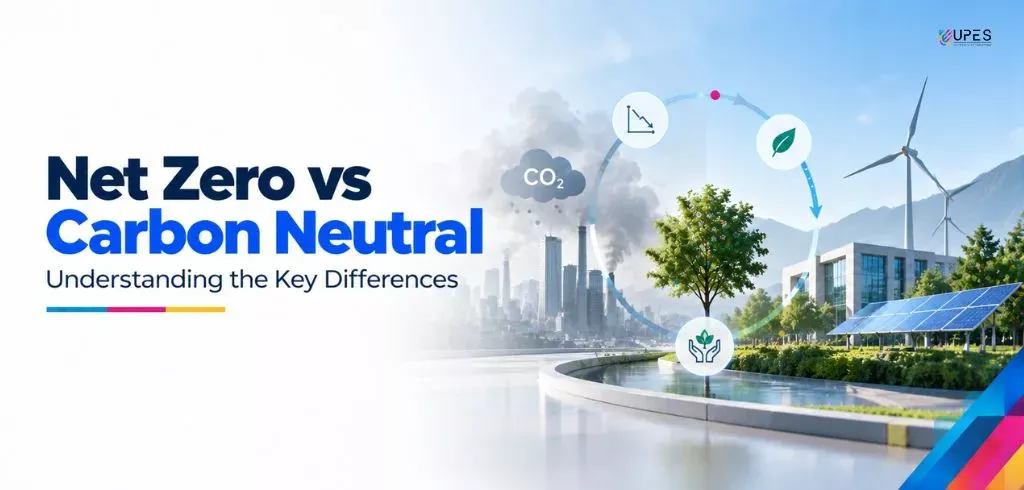
Net zero and carbon neutral both describe approaches to addressing greenhouse-gas emissions, but they are not interchangeable. Net zero generally requires deep reductions in emissions across a defined value chain, followed by neutralisation of limited residual emissions using carbon removals. Carbon neutrality involves reducing emissions and counterbalancing the remaining carbon footprint in accordance with an applicable standard or methodology.
The main differences lie in the emissions covered, depth of reduction, treatment of residual emissions, use of carbon credits and target boundary.
Become future-ready with our Business programs
Know MoreNet Zero vs Carbon Neutral at a Glance
Let’s have a quick look at Net Zero and Carbon Neutral approaches towards reducing carbon emissions from the following table:
Comparison factor | Net zero | Carbon neutral |
Primary objective | Reduce emissions deeply and neutralize unavoidable residual emissions | Balance a defined carbon footprint |
Emissions covered | Generally, all relevant greenhouse gases | May focus primarily on CO₂ or CO₂e |
Organizational boundary | Typically covers the complete value chain | Can apply to a company, product, service, event or activity |
Emission reduction | Central requirement | Required under robust standards, but the extent can vary |
Role of offsets | Cannot replace deep value-chain reductions | May be used to counterbalance the defined footprint |
Residual emissions | Neutralized using permanent carbon removals | May be compensated through reduction, avoidance or removal credits, depending on the framework |
Target timeline | Usually tied to near- and long-term reduction targets | May be claimed for a particular year, product or activity |
Reduction approach | Deep emissions reductions are central before neutralising residual emissions | Reduction is prioritised under robust standards, with the remaining footprint counterbalanced according to the applicable methodology |
Common framework | ISO 14068:2026 | ISO 14068:2026 provides principles, requirements and guidance for achieving and demonstrating carbon neutrality. |
What Does Net Zero Mean?
Net zero greenhouse-gas emissions refers to a state in which emissions are reduced as deeply as possible and remaining residual emissions are balanced through appropriate greenhouse-gas removals. For companies following a recognised corporate net-zero framework, the emphasis is therefore on reducing emissions across operations and the value chain before neutralising residual emissions.
To achieve net zero emissions, companies may follow the following concepts:
- Measure: Establish a greenhouse-gas inventory covering relevant Scope 1, Scope 2 and Scope 3 emissions
- Reduction: Implement deep emissions reductions across operations and the value chain through measures such as energy efficiency, electrification, renewable or other lower-carbon energy, process redesign and supplier engagement.
- Neutralise residual emissions: At the net-zero target point, neutralise emissions that remain after deep reductions using eligible carbon-removal approaches consistent with the applicable standard.
How is Net Zero Achieved?
Companies across sectors implement various operational carbon removal strategies such as switching to clean energy and green industries. The following are some of the common measures companies take to achieve net zero emissions:
1. Clean energy: Companies may transition to lower-carbon electricity sources, such as renewable energy like solar and wind; depending on geography and policy, the suitable mix may also include nuclear power.
2. Electric transport: Instead of petrol and diesel operating transportation vehicles, companies may emphasis on using electric vehicles.
3. Energy efficiency: By deploying smart technologies, energy efficient appliances, and building insulation-friendly interiors, companies may foster an energy efficient work environment.
4. Green industry: Companies may promote green industry initiatives by using clean hydrogen and recyclable materials in manufacturing and construction.
What Does Carbon Neutral Mean?
Carbon neutrality means achieving a balance for a defined carbon footprint in accordance with an applicable methodology or standard. A credible carbon-neutrality approach starts by quantifying the footprint, prioritising emissions reductions and removal enhancements, and then counterbalancing the remaining footprint using eligible carbon credits or other mechanisms permitted by the applicable standard.
What is Carbon Offsetting?
In simple words, carbon offsetting is the process of making up for the carbon dioxide emission by a company through supporting projects that reduce or remove an equivalent amount CO₂ elsewhere. For example, an organisation may purchase independently verified carbon credits from eligible projects that reduce, avoid or remove greenhouse-gas emissions. The credibility of the claim depends partly on factors such as the crediting methodology, additionality, permanence, verification and risk of double counting.
How Does an Organization Become Carbon Neutral?
To become a carbon neutral company, an organization is required to follow structured plan and process:
1. Measure carbon footprint:
Measuring the total carbon footprint of an organization require the following processes:
| Scope | What It Covers | Example |
| Scope 1 | Direct emissions from owned/controlled sources | Fuel burned in company vehicles or facilities |
| Scope 2 | Indirect emissions from purchased energy | Purchased electricity |
| Scope 3 | Other indirect value-chain emissions | Purchased goods, logistics, business travel, product use |
- Scope 1: Calculate the total emission caused by directly owned sources such as company vehicles, machines, and factories.
- Scope 2: Measure indirect emissions from purchased electricity, heating, and cooling.
- Scope 3: Measure all other indirect sources across upstream and downstream value-chain emissions.
2. Set goals
Once the organization is aware of the emission numbers, it is time to create an effective plan and set achievable targets to reach carbon neutral status. These goals may include:
- Switching operations to renewable energy and low carbon electricity sources, such as solar, nuclear, and wind energy.
- Improving energy efficiency across operational channels of the organization.
- Committing to reduce industrial waste and not using single use plastic products.
3. Invest on carbon offsets
The next step in achieving carbon neutrality is to invest in carbon offsets. Companies can purchase verified carbon credits equivalent to the remaining, unavoidable emissions and invest in initiatives that work on reducing carbon emissions.
4. Verify and Report
Organisations should document and report their methodology transparently and obtain independent verification or assurance where required by the applicable standard or claim framework.
What is the Difference between Net Zero and Carbon Neutral
Net Zero and Carbon Neutral are two different concepts both working towards a common goal of holding organizations responsible for their carbon footprints and reducing overall emission levels. Key differences between both can be explained by the following factors:
Types of Emissions
Net-zero targets typically include all relevant greenhouse gas emissions within defined organizational and value-chain boundaries. Carbon-neutral claims may include CO₂ or a broader CO₂-equivalent footprint, depending on the standard, subject, and boundary chosen.
Depth of Emission Reduction
According to SBTi's corporate framework, corporations must prioritize deep emissions reductions across their value chains and neutralize limited remaining emissions by the net-zero target year. The particular criteria vary according on the applicable standard, sector, and target pathway.
Treatment of Residual Emission
Net-zero frameworks require deep emissions reductions before residual emissions are neutralised. The exact level of reduction and treatment of residual emissions depends on the applicable standard, sector and pathway, so a single residual-emissions percentage should not be presented as universally applicable.
Reliance on Carbon Offsets
Carbon-neutrality claims can apply to a defined subject such as an organisation, product, service, building or event, depending on the applicable standard. Corporate net-zero targets generally address a broader organisational emissions inventory, including relevant value-chain emissions, under the chosen framework.
Target Boundary
Companies using a carbon neutrality framework can target a single product, service, or business unit. On the other hand, Net Zero strictly requires permanent carbon removal and storage.
Standardization and Verification
ISO 14068-1 establishes an internationally recognized standard for establishing carbon neutrality. The SBTi Corporate Net-Zero Standard specifies criteria that firms can use to establish and submit science-based net-zero targets for validation.
Carbon Neutral vs Climate Neutral
Carbon neutral generally refers to balancing a defined carbon or greenhouse-gas footprint under an applicable methodology. Climate neutral can be used more broadly to describe an overall neutral impact on the climate, potentially considering effects beyond carbon dioxide alone. Because terminology can vary between standards and organisations, readers should check the exact boundary and methodology behind any neutrality claim.
Why Net Zero and Carbon Neutral Are Often Confused
Since both Net Zero and Carbon Neutral processes aim to limit carbon emissions and offer frameworks for corporates to systematically reduce carbon footprint, both are used interchangeably. The key distinction is not simply whether offsets are used, but how deeply emissions must be reduced, which emissions are included, what type of credits or removals can address the remainder, and what standard governs the claim.
Net Zero vs Carbon Neutral: Which Approach Is More Appropriate?
While both Net Zero and Carbon Neutral aim to reduce carbon emissions and footprints left by organizations. The appropriate approach depends on the objective and the standard being applied. Corporate net-zero frameworks generally require deeper long-term emissions reductions across operations and relevant value chains, with residual emissions neutralised at the target date. Carbon neutrality can apply to a defined organisation, product, service, building or event and, under standards such as ISO 14068:2026, also prioritises emissions reductions before offsetting the remaining footprint.
Businesses should therefore compare the scope, reduction pathway, treatment of residual emissions, quality of credits/removals, verification requirements and transparency of the claim, rather than relying only on the label.
When Might Each Approach Be Used?
| Objective | Relevant Approach |
| Long-term corporate decarbonisation | Net-zero target/framework |
| Defined product footprint | Carbon-neutrality framework may apply |
| Defined event or service | Carbon-neutrality framework may apply |
| Deep value-chain decarbonisation | Net-zero framework |
| Addressing current defined footprint while pursuing long-term reductions | Carbon neutrality may complement a longer-term net-zero pathway |
Can an Organization Pursue Carbon Neutrality and Net Zero Together?
Yes, organizations can pursue carbon neutrality to take immediate climate action by balancing current emissions, while creating a structured long-term Net Zero framework to minimize emissions over a set period.
Examples of Net-Zero and Carbon-Neutral Actions
Some of the real-world examples of companies pursuing carbon neutrality and net zero together include:
1. Infosys: Infosys reported achieving carbon neutrality for fiscal 2020 by investing in high-quality offsets. Furthermore, the organization continues to aim towards reducing carbon footprints and aims to achieve Net Zero by 2040 through its Carbon Reduction Plan.
2. Microsoft: Global tech giant, Microsoft become Carbon Neutral in 2012 and has committed to becoming Carbon Negative by the year 2030.
3. Unilever: Through its Climate Transition Action Plan Unilever aims to achieve net zero across all its value chain by 2039. On the other hand, several of the company’s manufacturing units have already declared carbon neutrality.
Common Misconceptions About Net Zero and Carbon Neutrality
Myth1: Carbon neutral and Net Zero mean the same thing
Fact: They are related but distinct concepts. Their differences depend on the emissions boundary, required depth of reduction, treatment of residual emissions and applicable standard.
Myth 2: Net Zero means producing no emissions
Fact: Net zero requires deep emissions reductions first, followed by neutralization of limited residual emissions that cannot yet be eliminated.
Myth 3: Buying offsets makes a company net zero:
Fact: Purchasing carbon credits alone does not establish that a company has achieved net zero under a robust corporate net-zero framework. Net zero requires deep emissions reductions first, followed by neutralisation of residual emissions according to the applicable standard.
- Myth 4: Carbon neutrality never requires reductions: While carbon neutrality offers offsetting to reduce the impact of carbon emissions, the framework encourages companies to reduce carbon emissions by replacing fossil fuels with renewable energy sources and taking up other measures.
- Myth 5: All carbon credits are equally credible
- Fact: Carbon credits differ in methodology, additionality, permanence, monitoring, verification and risk of double counting. The integrity of the credits used can materially affect the credibility of a carbon-neutrality or climate claim.
Why Claim Integrity Matters
Terms such as “carbon neutral” and “net zero” can be misunderstood when organisations do not clearly disclose the emissions boundary, reduction pathway, use of carbon credits and verification methodology behind the claim.
Businesses should communicate:
- what entity, product or activity the claim covers;
- which greenhouse gases and emission scopes are included;
- the baseline and target year;
- reductions achieved;
- residual emissions;
- credits or removals used;
- the standard/methodology followed; and
- whether independent verification or assurance has been obtained.
Transparent disclosure helps stakeholders distinguish substantive decarbonisation efforts from claims that rely heavily on compensation without sufficient underlying reductions.

Our counsellors are just a click away.
FAQs
Can a company be Carbon Neutral but not Net Zero?
Yes, a company can claim carbon neutrality for a defined footprint by reducing some emissions and compensating for the remainder with eligible carbon credits. It may still be far from net zero if it has not made deep reductions across Scope 1, Scope 2 and relevant Scope 3 emissions.
What is the difference between net zero and carbon neutral buildings?
Carbon neutral and net zero buildings both aim to reduce their environmental impact, but they take different approaches. A carbon neutral building balances the carbon dioxide it produces by purchasing carbon offsets or supporting projects that remove an equivalent amount of carbon from the atmosphere. A net zero building goes much further by first reducing greenhouse gas emissions as much as possible throughout its entire lifecycle.
What is the difference between net zero carbon and net zero energy?
Net zero carbon means reducing carbon emissions as much as possible and balancing any remaining emissions by removing or offsetting an equal amount of carbon dioxide. Net zero energy, on the other hand, means a building or system generates as much renewable energy as it consumes over a year, usually through sources such as solar or wind power.
What is the difference between carbon removal and carbon offset?
Carbon removal and carbon offset are both used to address climate change, but they work in different ways. Carbon removal involves physically removing carbon dioxide that is already in the atmosphere and storing it safely for the long term through natural or technological methods. Carbon offsetting, on the other hand, allows individuals or organizations to compensate for their emissions by supporting projects that reduce, avoid, or remove emissions elsewhere, such as renewable energy, forest conservation, or reforestation projects.
What is Carbon credit vs carbon offset?
A carbon credit is generally a tradable unit representing a quantified amount of greenhouse-gas reduction, avoidance or removal under a specific methodology. Carbon offsetting describes the use of eligible credits to compensate for emissions elsewhere. Terminology can vary between markets and standards.

UPES Editorial Team
Written by the UPES Editorial Team
UPES Admission Enquiry
Trending Post
-

-

Business Intelligence vs Data Analytics: Differences, Careers, Skills & Salary
05/10/2026By UPES Editorial Team
-


Related Articles
































































Subscribe to UPES Blogs
Join our community for exclusive stories, insights, and updates
By clicking the "Subscribe" button, I agree and accept the privacy policy of UPES.


